
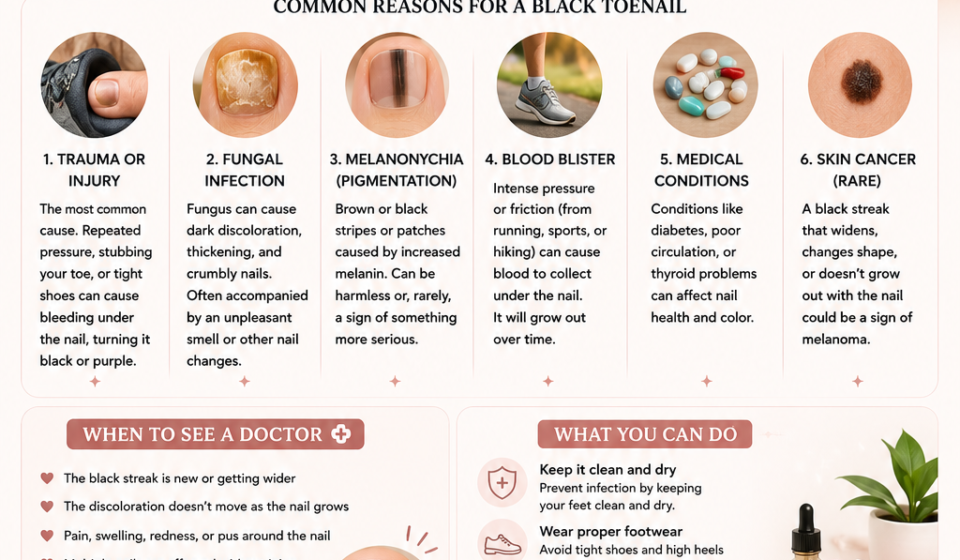

A black toenail can be alarming, especially if it appears suddenly or without an obvious cause. While it may look serious, in many cases it’s a common issue caused by minor injuries or pressure. However, sometimes it can signal an underlying condition that requires medical attention.
In this comprehensive SEO-optimized guide, we’ll explore why your toenail has gone black, the most common causes, symptoms to watch for, treatment options, and when you should see a doctor.
What Does a Black Toenail Mean?
A black toenail usually indicates blood, pigment, or damage beneath or within the nail. The discoloration can range from dark red and purple to deep brown or black.
Common reasons include:
- Injury or trauma
- Repeated pressure (e.g., tight shoes)
- Fungal infections
- Underlying medical conditions
Understanding the exact cause is key to proper treatment.
Common Causes of a Black Toenail
1. Toenail Trauma (Subungual Hematoma)


4
The most common cause of a black toenail is a subungual hematoma, which occurs when blood collects under the nail after an injury.
Causes:
- Dropping something heavy on your toe
- Stubbing your toe
- Sports injuries
- Running or hiking long distances
Symptoms:
- Dark red, purple, or black color
- Pain or pressure under the nail
- Swelling
2. Repetitive Pressure (“Runner’s Toe”)

4
Athletes often experience black toenails due to repeated pressure from shoes.
Common in:
- Runners
- Football players
- Hikers
Why it happens:
Constant friction causes tiny injuries that lead to bleeding under the nail.
3. Fungal Nail Infection


4
A fungal infection can sometimes turn the nail dark.
Signs:
- Thickened nail
- Crumbly texture
- Yellow, brown, or black discoloration
- Odor
This condition is known as onychomycosis.
4. Nail Melanoma (Rare but Serious)


4
In rare cases, a black toenail may be a sign of subungual melanoma, a type of skin cancer.
Warning signs:
- Dark streak or line that grows
- Color spreading to surrounding skin
- No history of injury
- Nail changes shape
⚠️ This requires immediate medical attention.
5. Poor Foot Hygiene or Bacterial Infection


4
Bacteria can sometimes cause nail discoloration, especially in moist environments.
6. Medical Conditions
Certain health conditions can affect nail color:
- Diabetes
- Circulatory problems
- Vitamin deficiencies
These conditions may weaken nails and make them more prone to discoloration.
Symptoms That May Accompany a Black Toenail
Depending on the cause, you may notice:
- Pain or throbbing
- Swelling
- Nail lifting or falling off
- Thickening or brittleness
- Discharge or odor
Is a Black Toenail Dangerous?
In most cases, a black toenail is not dangerous and will heal on its own. However, it becomes concerning if:
- There is no clear cause
- The discoloration spreads
- Pain is severe
- It doesn’t improve over time
How to Treat a Black Toenail at Home
1. For Minor Injury
- Rest your foot
- Apply ice to reduce swelling
- Keep the area clean
- Avoid tight shoes
2. Protect the Nail
- Use comfortable footwear
- Keep nails trimmed
- Avoid pressure on the toe
3. Let It Grow Out
In many cases, the black part will grow out with the nail over time.
Medical Treatments for Black Toenails
1. Draining Blood (If Painful)
Doctors may release trapped blood to relieve pressure.
2. Antifungal Treatment
For infections, you may need:
- Topical creams
- Oral medications
3. Nail Removal (Severe Cases)
If the nail is badly damaged, it may be removed.
How Long Does a Black Toenail Take to Heal?
Toenails grow slowly, so recovery takes time:
- Minor cases: a few weeks
- Full nail regrowth: 6–12 months
When Should You See a Doctor?
Seek medical attention if:
- There is severe pain
- The nail turns black without injury
- You notice a dark streak
- The nail becomes infected
- You have diabetes or poor circulation
Can a Black Toenail Fall Off?
Yes, in some cases the nail may loosen and fall off. This is normal if the nail has been damaged.
A new nail will usually grow back, but it may take several months.
How to Prevent Black Toenails
1. Wear Proper Shoes
Choose shoes that fit well and allow toe movement.
2. Trim Nails Regularly
Keep nails short to avoid pressure.
3. Maintain Foot Hygiene
Keep feet clean and dry.
4. Use Protective Gear
Wear proper footwear during sports.
Black Toenail vs Bruised Toenail: What’s the Difference?
| Condition | Cause | Appearance |
|---|---|---|
| Bruised nail | Injury | Purple/black |
| Fungal infection | Fungus | Yellow/black, thick |
| Melanoma | Cancer | Dark streak |
Common Myths About Black Toenails
Myth 1: It Always Means Infection
Reality: Most cases are due to trauma.
Myth 2: You Should Remove It Yourself
Reality: This can cause infection.
Myth 3: It Will Never Heal
Reality: Most cases resolve naturally.
Can You Paint Over a Black Toenail?
Yes, but:
- Ensure there’s no infection
- Avoid covering serious conditions
- Let the nail breathe when possible
Does a Black Toenail Always Hurt?
Not always. Some cases are painless, especially if caused by old trauma or fungal infection.
Final Thoughts
A black toenail can look concerning, but in most cases, it’s caused by minor injury or pressure and will heal over time. However, it’s important to pay attention to unusual symptoms, especially if there’s no clear cause.
If you’re ever unsure, it’s always best to consult a medical professional to rule out serious conditions.
Taking care of your feet, wearing proper footwear, and maintaining hygiene can go a long way in preventing black toenails in the future.