
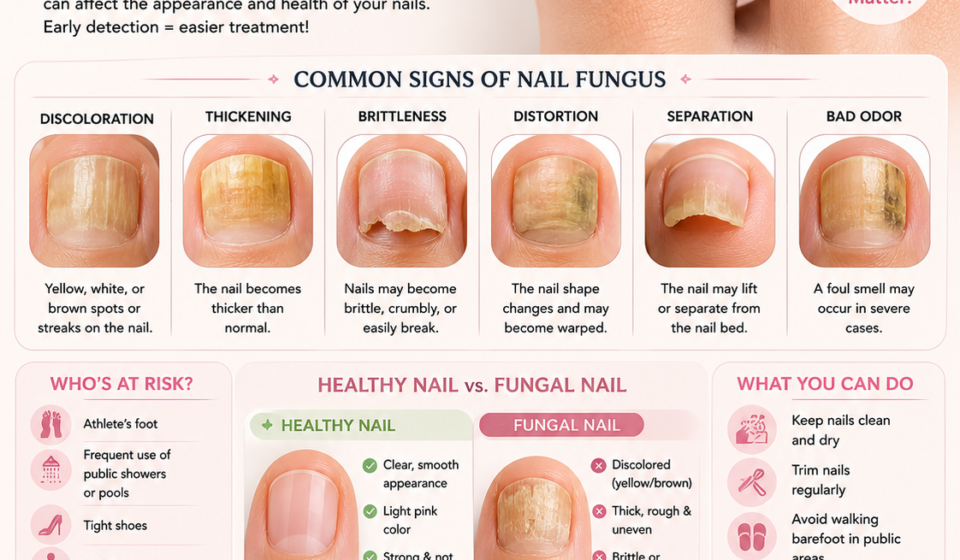

Nail fungus is one of the most common nail conditions in the world — and one of the most frequently misidentified. Many people notice something unusual about a nail and wonder if it might be fungal, while others have a significant infection and mistake it for a bruise, a stain, or simply aging. Understanding exactly what nail fungus looks like — how it starts, how it progresses, and how it differs from other nail conditions — is the first and most important step toward addressing it effectively.
This comprehensive guide covers every visual and physical characteristic of nail fungus: the earliest signs that are easy to miss, the more advanced symptoms that develop as an infection progresses, how nail fungus looks different depending on which type of fungus is responsible, how to tell it apart from other conditions that look similar, and when and why you should seek professional diagnosis and treatment.
It is important to note upfront: while this guide provides detailed visual and symptomatic information to help you recognize a possible fungal nail infection, it is not a substitute for professional diagnosis. Only a qualified healthcare provider — typically a dermatologist or podiatrist — can confirm nail fungus through examination and, where necessary, laboratory testing. If you suspect you have nail fungus, professional evaluation is always the right next step.
What Is Nail Fungus?
Nail fungus — known medically as onychomycosis — is a fungal infection of the nail, the nail bed beneath it, or both. It is the most common disease of the nails, accounting for approximately 50% of all nail abnormalities seen by healthcare providers. It affects an estimated 10% of the general population worldwide, rising to around 20% in people over 60 and as high as 50% in those over 70.
Nail fungus most commonly affects the toenails — particularly the big toe — because feet spend significant time in warm, moist environments (shoes and socks) that are highly favorable to fungal growth. Fingernail infections are less common but do occur, particularly in people who frequently have their hands in water or who have compromised immune systems.
The organisms responsible for nail fungus are predominantly dermatophytes — a group of fungi that feed on keratin, the protein that makes up nails and skin. The most common culprit is Trichophyton rubrum. In some cases, yeasts (particularly Candida species) or non-dermatophyte molds are responsible, and these may look somewhat different from classic dermatophyte infections.
What Does Nail Fungus Look Like in Its Early Stages?
One of the most important things to understand about nail fungus is that it rarely announces itself dramatically at the beginning. Early-stage onychomycosis is subtle, easy to dismiss, and frequently mistaken for something minor and temporary. Recognizing these early signs is valuable because nail fungus is significantly easier — and faster — to treat when caught early.
A White or Yellow Spot Under the Nail
The most common early sign of nail fungus is the appearance of a small white or yellow spot at the tip of the nail, visible either on the nail surface or, more characteristically, beneath the nail plate at the free edge. This spot is often dismissed as a minor discoloration or a stain, particularly in people who wear nail polish regularly and don’t inspect their bare nails closely.
The spot typically has slightly irregular edges and a somewhat powdery or chalky quality that distinguishes it from a water stain or product residue. Over time — if left untreated — this spot slowly spreads inward, toward the cuticle, growing larger and deeper as the fungal infection progresses through the nail plate and nail bed.
Slight Thickening at the Nail Tip
In some early infections, mild thickening begins at the tip of the nail before discoloration becomes obvious. The nail may feel slightly raised or bulkier at the free edge than usual, and the underside of the nail at the tip may show a buildup of whitish, powdery debris when examined closely.
Very Mild Changes in Surface Texture
Early fungal infections sometimes cause a slight roughening or dulling of the nail surface in a localized area. The characteristic high gloss of a healthy nail becomes slightly matte in the affected zone, and the surface may feel finely textured or powdery rather than smooth when touched.
What Does Nail Fungus Look Like as It Progresses?
If an early-stage nail fungus infection is not treated, it spreads and deepens over weeks and months, producing increasingly visible and often unmistakable changes to the nail’s appearance, texture, and structure. This is what most people picture when they think of nail fungus — the intermediate to advanced presentation that has had time to develop.
Discoloration — Yellow, Brown, White, or Black
Color change is the most recognizable feature of nail fungus and the sign that most people first notice and seek information about. The specific color that develops depends on the type of fungus involved, the severity of the infection, and individual variation, but the most common presentations are:
Yellow nails: The most frequently seen presentation of nail fungus. The nail develops a yellow tint that typically begins at the tip or along one edge and spreads inward and outward. The yellow ranges from pale, straw-like tones in early-to-intermediate infections to a deep, muddy or brownish-yellow in more advanced cases.
White nails: A specific type of fungal infection — superficial white onychomycosis — causes white, chalky patches to appear on the surface of the nail rather than beneath it. This presentation looks almost as though the nail has been dusted with white powder. The patches may be small and isolated at first, then spread to cover the entire nail surface.
Brown or dark nails: As infections advance or in certain types of fungal infection, nails can turn a dark yellow-brown or even a deep coffee brown. This darker presentation is more common in toenail infections and can sometimes be mistaken for a bruise beneath the nail.
Black nails from fungus: Though less common than yellow or white changes, some fungal infections — particularly those caused by certain molds rather than dermatophytes — can cause black or very dark discoloration. This presentation is more likely in people with compromised immune function and is less common in the general population.
Greenish discoloration: A greenish tinge in a nail typically suggests a secondary bacterial infection (particularly Pseudomonas bacteria) alongside or following a fungal infection. This combination produces a distinctive green-black or blue-green color that is different from the yellow-brown of pure fungal infection.
Thickening of the Nail Plate
As fungal infection progresses, the nail typically becomes significantly thicker than normal. This thickening occurs because the fungal organisms damage the nail matrix (the growth center at the base of the nail), causing the nail to grow in a disorganized, irregular way that produces more material than a healthy nail.
Advanced fungal infections can cause nails to become dramatically thickened — sometimes two to three times the normal nail thickness — making them difficult or impossible to trim with standard nail clippers and requiring a heavy-duty nail nipper or professional intervention. This excessive thickness is one of the most physically problematic aspects of nail fungus, particularly for toenails where it can cause discomfort or pain in footwear.
Nail Brittleness and Crumbling
Healthy nails have a structural integrity that allows them to grow, flex slightly without breaking, and be trimmed cleanly. Fungal infection progressively destroys this structural integrity by digesting the keratin that gives the nail its strength. The result is a nail that becomes:
Brittle: The nail cracks, chips, or breaks far more easily than a healthy nail, sometimes breaking spontaneously during normal daily activities.
Crumbly: In more advanced infections, the nail material becomes soft and crumbly — pieces break off at the edges and tip, and the surface of the nail may disintegrate when scratched or filed. The crumbled material often has a dry, chalky, or powdery quality.
Ragged and irregular: Rather than a clean, smooth free edge, a fungally infected nail develops an uneven, ragged tip where pieces have broken off unevenly.
Separation of the Nail from the Nail Bed (Onycholysis)
One of the more distinctive signs of advanced nail fungus is the nail lifting away from the nail bed beneath it — a condition called onycholysis. This separation typically begins at the free edge and progresses toward the cuticle as the infection spreads.
When the nail lifts, a visible gap appears between the nail plate and the nail bed. This space is typically filled with a buildup of whitish or yellowish-brown powdery debris — a combination of fungal material, dead skin cells, and nail plate particles. The skin of the nail bed in this separated area may look pale, yellowish, or slightly macerated.
Onycholysis associated with nail fungus is important to recognize because the gap beneath the nail creates an ideal environment for further fungal proliferation — warm, dark, and protected from the outside environment.
A Distinctive Smell
Nail fungus often produces a characteristic odor — described variously as musty, unpleasant, cheesy, or foul — that becomes more noticeable as the infection progresses and more nail material becomes infected. This smell is produced by the metabolic byproducts of the fungal organisms as they digest keratin.
A noticeable nail odor that is not explained by poor hygiene, recent injury, or another obvious cause is worth taking seriously as a potential indicator of fungal infection, particularly when combined with any of the visual changes described above.
Distortion of the Nail Shape
In advanced or long-standing nail fungus, the nail may become significantly distorted in shape — curved downward (called a ram’s horn nail or onychogryphosis in extreme cases), twisted to one side, or growing in an irregular, uneven pattern. This shape distortion occurs because the ongoing damage to the nail matrix disrupts the normally uniform cell production that produces an evenly-shaped nail.
The Different Types of Nail Fungus and How They Look
Nail fungus is not a single, uniform infection — different types of onychomycosis have distinct visual presentations that can help healthcare providers identify the specific organism involved and guide treatment choices.
Distal and Lateral Subungual Onychomycosis (DLSO)
This is the most common type of nail fungus, responsible for the majority of all cases. DLSO begins at the distal (tip) and/or lateral (side) edge of the nail and progresses inward toward the cuticle.
How it looks: Yellow-white or yellow-brown discoloration starting at the tip or side of the nail, gradually spreading toward the base. As it progresses, the nail becomes thickened, brittle, and crumbly, and the nail separates from the nail bed beginning at the tip. A buildup of white-yellow debris appears beneath the lifted nail.
Superficial White Onychomycosis (SWO)
This type affects the surface of the nail plate rather than starting beneath it, and is caused by certain species of dermatophytes or non-dermatophyte molds that can penetrate the nail surface directly.
How it looks: Small, white, chalky or powdery spots on the top surface of the nail — not beneath it. The spots are clearly on the surface and can sometimes be scraped off (distinguishing them from internal discoloration). They spread outward to eventually cover the entire nail surface in a uniform white, powdery appearance. This type is more common on toenails and in people with HIV or other immune deficiencies.
Proximal Subungual Onychomycosis (PSO)
PSO is the least common type in the general population but is more frequently seen in people with HIV infection or other forms of immunocompromise. Rather than starting at the tip, it begins at the base (proximal end) of the nail, near the cuticle.
How it looks: White or off-white discoloration appears at the base of the nail, near the cuticle, and spreads outward toward the tip. The surface of the nail may initially appear normal while the discoloration is visible beneath the nail plate at the base. This presentation — discoloration starting at the base rather than the tip — is a relatively unusual finding and may prompt a healthcare provider to assess for underlying immune system issues.
Candidal Onychomycosis
This type is caused by Candida yeast species rather than dermatophytes and is more common on fingernails than toenails. It is most frequently seen in people who frequently have their hands in water (occupational wet work) and in those with chronic mucocutaneous candidiasis.
How it looks: The appearance often differs from dermatophyte infections. The nail may be:
- Thickened and discolored (typically white or yellow)
- Associated with paronychia — significant redness, swelling, and tenderness of the skin surrounding the nail base and sides
- Showing signs of complete nail destruction in severe cases
The involvement of the surrounding skin (the nail folds) is more prominent in candidal infections than in typical dermatophyte nail fungus.
What Nail Fungus Does NOT Look Like: Distinguishing It from Similar Conditions
Because nail fungus is so frequently misidentified — both by people who have it and don’t realize it, and by people who don’t have it and think they do — understanding what can mimic nail fungus is clinically important.
Nail Psoriasis
Nail psoriasis — a manifestation of the autoimmune skin condition psoriasis — can look remarkably similar to nail fungus and is misdiagnosed as fungal infection frequently enough that dermatologists actively look for it as a differential. Signs that can appear in both conditions include:
- Yellow-brown discoloration beneath the nail (oil drop sign in psoriasis)
- Nail thickening
- Crumbling and brittleness
- Separation from the nail bed
Signs that more specifically suggest psoriasis rather than fungus include: pitting of the nail surface (small, ice-pick-like depressions), a red or orange tinge to the discoloration (the oil drop sign has a distinctive warm, translucent quality), and the presence of psoriatic skin lesions elsewhere on the body.
Definitive distinction between psoriasis and fungal infection requires laboratory testing — a dermatologist can perform nail clippings or scrapings for microscopy and culture.
Traumatic Nail Changes
Physical trauma to a nail — from stubbing a toe, from tight footwear rubbing repeatedly against the nail, or from a single acute impact — can cause many of the same visual changes as nail fungus:
- Black or brown discoloration (subungual hematoma — blood under the nail)
- Nail separation from the nail bed
- Thickening or distortion
- White areas
The key distinction is history: traumatic changes typically have a clear preceding cause and do not spread progressively. Fungal infection, by contrast, typically spreads slowly and continuously.
Yellow Nail Syndrome
Yellow nail syndrome is a rare condition characterized by thick, slow-growing yellow nails associated with respiratory conditions and lymphedema. The yellow discoloration of yellow nail syndrome tends to be more uniform and complete across all nails than the patchy, progressive yellowing of fungal infection, and is not associated with the crumbling and debris characteristic of onychomycosis.
Lichen Planus of the Nail
Lichen planus is an inflammatory condition that can affect the nails, causing thinning, grooves, ridges, and in severe cases, destruction of the nail. Unlike fungal infection, nail lichen planus typically causes nail thinning rather than thickening, and may be associated with lichen planus lesions on the skin or mouth.
Simple Nail Staining
Regular nail staining from nail polish (particularly red and dark-colored polishes used without a base coat), self-tanning products, hair dye, or certain medications can cause yellow or brown discoloration that may be mistaken for nail fungus. Staining is typically uniform across the nail surface, does not involve thickening or texture changes, and resolves after the staining agent is removed.
Risk Factors: Who Is Most Likely to Get Nail Fungus?
Understanding risk factors helps explain why some people are much more prone to nail fungus than others and why it is so much more common in toenails than fingernails.
Age: Nail fungus is significantly more common with advancing age. Older nails grow more slowly (giving fungi more time to establish), have been exposed to more nail trauma, and the immune system’s capacity to resist fungal colonization decreases with age.
Compromised immune system: People with diabetes, HIV/AIDS, cancer, or those taking immunosuppressive medications (such as organ transplant recipients or those on long-term corticosteroids) are at significantly higher risk for nail fungus and for more severe and difficult-to-treat infections.
Diabetes: Diabetes increases fungal nail infection risk through multiple mechanisms — impaired circulation to the feet, reduced immune function, and higher glucose levels in the tissues that may support fungal growth.
Circulation problems: Poor circulation to the feet and toes — from peripheral arterial disease, chronic venous insufficiency, or other vascular conditions — reduces the immune system’s ability to fight off fungal colonization in the nails.
Swimming pools, gyms, and public showers: Walking barefoot on surfaces contaminated with fungal organisms — wet pool surrounds, gym locker rooms, communal showers — is one of the primary routes of infection transmission.
Tight or occlusive footwear: Shoes that keep the feet warm and moist create an ideal fungal growth environment. Athletes who wear tight training shoes and those whose feet sweat heavily are at elevated risk.
Previous fungal skin infections: Athlete’s foot (tinea pedis) and nail fungus are frequently connected — the same organisms responsible for athlete’s foot can spread to the nails, and having had athlete’s foot repeatedly significantly increases nail fungus risk.
Nail trauma: Repeated minor trauma to the nail — such as that caused by tight footwear pressing against the toenails, or from sports activities — creates small entry points for fungal organisms.
Family history: There appears to be a genetic component to susceptibility to nail fungus — it tends to run in families, possibly related to the immune system’s response to fungal organisms.
When to See a Doctor
Not every nail abnormality is nail fungus, and not every case of nail fungus requires urgent medical attention — but there are clear situations where professional evaluation is important.
See a doctor if:
- Any nail change persists for more than two to three weeks without a clear cause
- More than one nail is affected, particularly if the changes are spreading
- You have diabetes, peripheral vascular disease, or a compromised immune system — in these populations, nail fungus can lead to more serious complications and should always be professionally evaluated and treated
- There is pain, swelling, redness, or warmth around the nail — these may indicate a secondary bacterial infection
- The nail is separating significantly from the nail bed
- The discoloration includes green or black areas, which may suggest bacterial co-infection or a less common fungal organism
- You have tried over-the-counter antifungal treatments without improvement after the recommended treatment period
- You are uncertain whether your nail changes are fungal — a professional diagnosis prevents inappropriate self-treatment
How Is Nail Fungus Diagnosed?
Visual inspection alone is not sufficient to definitively diagnose nail fungus, because many other conditions can look identical. Healthcare providers — typically dermatologists or podiatrists — use several methods to confirm the diagnosis:
Nail clippings and scrapings: A sample of the affected nail material is collected and examined under a microscope (KOH preparation) to look for fungal elements — the branching filaments (hyphae) of dermatophytes or the clusters of yeast cells from Candida.
Fungal culture: The nail sample is grown in a laboratory culture medium over several weeks to identify the specific organism responsible. This is important for treatment planning because different antifungal medications are more effective against different organisms.
PCR testing: Polymerase chain reaction testing can identify the fungal organism’s genetic material rapidly and with high sensitivity, and is increasingly available as an alternative or supplement to culture.
Nail biopsy: In uncertain cases, a small section of the nail plate and nail bed may be sent for histological examination — examination of the tissue structure under a microscope with special stains that make fungal elements visible.
Accurate diagnosis is important not only to confirm that the condition is fungal (rather than psoriasis, trauma, or another mimicking condition) but also to identify the specific organism, which guides the most appropriate treatment choice.
Treating Nail Fungus
Treatment for nail fungus is available but typically requires patience — nail fungus is notoriously slow to treat because nails grow slowly and the antifungal medications must either penetrate the nail plate or work from the bloodstream as the nail grows.
Topical antifungals: Prescription topical treatments such as efinaconazole (Jublia), tavaborole (Kerydin), and ciclopirox lacquer are applied directly to the nail daily for extended periods (typically 48 to 52 weeks). They are most effective for mild to moderate infections and early-stage disease.
Oral antifungals: Systemic antifungal medications — most commonly terbinafine (Lamisil) and itraconazole — are taken by mouth for 6 to 12 weeks for fingernails and 12 weeks or longer for toenails. Oral treatments have higher cure rates than topical treatments for established infections but carry potential side effects and drug interactions that require medical oversight.
Laser treatment: Laser therapy for nail fungus is available at some dermatology practices and is generally used as an adjunct to other treatments rather than a standalone approach.
Nail debridement: Regular professional trimming and filing of the infected nail (debridement) by a podiatrist or dermatologist removes infected nail material, reduces the fungal load, and improves the penetration of topical treatments.
Over-the-counter products (tea tree oil, antifungal creams, Vicks VapoRub, and similar products) have limited evidence for effectiveness against established nail fungus and are not recommended as primary treatments, though some people use them as adjuncts. They are not appropriate for moderate to severe infections.
Preventing Nail Fungus
Prevention is meaningfully more achievable than treatment, which is slow, expensive, and has imperfect cure rates.
Keep feet clean and dry. After washing, dry feet thoroughly — particularly between the toes — before putting on socks and shoes.
Wear moisture-wicking socks. Natural fibers or technical moisture-wicking fabrics help prevent the warm, moist environment that fungi thrive in.
Wear protective footwear in high-risk areas. Flip-flops or shower sandals in communal showers, pool surrounds, gym locker rooms, and other warm, wet shared surfaces significantly reduce exposure to fungal organisms.
Choose breathable footwear. Shoes that allow airflow reduce foot moisture. Rotate footwear to allow shoes to dry fully between wearings.
Treat athlete’s foot promptly. Because athlete’s foot and nail fungus share the same organisms, treating skin fungal infections before they spread to the nails is an important preventive measure.
Keep nails trimmed short and clean. Short nails accumulate less debris beneath the free edge and are less likely to suffer the micro-trauma that creates fungal entry points.
Do not share nail tools. Nail clippers, files, and other tools can transmit fungal organisms between people. Use your own tools and disinfect them regularly.
Use antifungal powder in shoes. If you are prone to sweaty feet or have had nail fungus previously, antifungal foot powder used inside shoes reduces fungal load in the shoe environment.
Frequently Asked Questions
Can nail fungus go away on its own without treatment? Nail fungus very rarely resolves without treatment. Unlike some skin fungal infections, which may clear on their own with improved hygiene, nail fungus is deeply embedded in the nail structure and nail bed, where the immune system has limited ability to reach it. Without treatment, nail fungus typically progresses slowly but steadily.
Is nail fungus contagious? Yes — the fungal organisms responsible for nail fungus can spread through direct contact with an infected nail, shared nail tools, or contaminated surfaces. Within households, family members can spread nail fungus between each other. This is why good hygiene practices and not sharing nail tools are important.
Can nail polish hide nail fungus? Yes, and this is a genuine problem. Many people with nail fungus first notice it when they remove nail polish that has been covering the infected nail. While nail polish conceals the appearance of nail fungus, it also creates a warm, dark environment that may favor continued fungal growth. Nail technicians are trained to decline service on nails that show signs of fungal infection.
How long does it take for nail fungus to clear up with treatment? Even with effective treatment, nail fungus clears slowly because nails grow slowly. Fingernails typically show clear regrowth within 6 to 9 months of effective treatment. Toenails — which grow more slowly — may take 12 to 18 months. Full clearance is defined as a fully clear new nail growing from base to tip, which takes the full nail growth cycle.
Can children get nail fungus? Yes, though it is less common in children than in adults. Children can contract nail fungus from infected family members, from communal swimming pools and changing areas, or from shared footwear.
Does nail fungus smell? Yes — advanced nail fungus frequently produces a musty, unpleasant odor that is distinct from general foot odor. The smell is produced by the metabolic byproducts of the fungal organisms as they break down keratin.
Final Thoughts
Nail fungus is common, recognizable once you know what to look for, and — critically — treatable. The key is catching it early, when the infection is still limited and treatment is most effective, and getting a proper professional diagnosis rather than assuming and self-treating based on appearance alone.
The most important things to remember: watch for white or yellow spots at the nail tip, thickening, crumbling, separation from the nail bed, and unusual odor. If you see any combination of these changes, particularly if they are spreading or affecting more than one nail, take them seriously rather than dismissing them as cosmetic.
Your nails are telling you something when they change — learning to read those changes accurately, and responding with professional guidance, is the most effective path to healthy, clear nails.
This article is for informational purposes only and does not constitute medical advice. If you suspect you have nail fungus or any other nail condition, consult a qualified healthcare provider — a dermatologist or podiatrist — for diagnosis and treatment.