
Mehndi — the ancient art of applying intricate henna patterns to the skin — is one of the most beautiful, deeply meaningful, and culturally rich beauty traditions in the world. Practiced across South Asia, the Middle East, and North Africa for thousands of years, it has evolved from its ceremonial roots into a global art form that is celebrated not just for its cultural significance but for its extraordinary aesthetic beauty. And in 2026, luxury mehndi design has reached a level of artistic sophistication that is genuinely breathtaking — a synthesis of traditional pattern vocabularies with contemporary design sensibilities that produces looks of remarkable elegance and premium quality.
The luxury mehndi designs celebrated in this guide are defined by a specific quality of execution and intention that separates them from simpler applications. They are characterized by density and precision — patterns so carefully worked that every square centimeter of the design is intentional. By visual hierarchy — the way the eye is drawn through the composition from a focal point outward through layers of progressively finer detail. By the quality of the henna itself — premium, fresh paste that produces a deep, rich brown-to-burgundy stain of the kind that reads as genuinely luxurious against every skin tone. And by the skill and experience of the mehndi artist whose hands create something from imagination and tradition that is completely unique to the person who wears it.
This comprehensive guide covers the most beautiful luxury mehndi design styles for 2026 — bridal and event mehndi, Arabic and Indo-Western styles, design elements and motifs that define premium work, how to choose the right design for your event, how to prepare for and care for your mehndi application, and everything else you need to know to arrive at your event with henna that is truly extraordinary.
What Defines Luxury Mehndi? Understanding Premium Quality
The word “luxury” in mehndi design refers to several specific qualities that distinguish exceptional work from competent application.
Intricate Detailing and Density
The most immediate visual marker of luxury mehndi is the density and intricacy of the pattern. Where basic mehndi applications feature simple, widely-spaced motifs, luxury designs fill the available space with layered, interworking patterns in which no area is left unaddressed. The density of a premium mehndi design is such that looking at it is an experience — there is always more detail to discover, more pattern within pattern, more delicate line work nested within broader compositional elements.
This density requires both skilled draftsmanship and exceptional patience from the artist. A luxury bridal mehndi application on both hands and feet can take four to eight hours to complete — the time investment itself is part of what makes the result extraordinary.
Fine Line Work
The fineness of the lines within a mehndi design is one of the most reliable indicators of artist skill and design quality. Luxury mehndi is characterized by line work that is extremely fine — delicate enough to suggest embroidery or lacework rather than the bolder lines of simpler designs. This fineness requires a precisely formulated henna paste of exactly the right consistency, a cone with a very small aperture, and an artist with exceptional hand control developed through years of practice.
Fine line work is what allows patterns within patterns — the ability to fill a petal, a leaf, or a paisley with miniature designs that are themselves complete and beautiful — and it is this quality that creates the layered visual complexity that makes luxury mehndi genuinely extraordinary.
Compositional Architecture
Luxury mehndi designs are not simply collections of beautiful motifs — they have compositional architecture. There is a logic to how the design moves across the hand: a focal point (typically on the back of the hand or the palm), from which the design radiates outward through progressively different scales of pattern, transitioning across the wrist and up the forearm in a way that tells a coherent visual story.
This architectural quality is what distinguishes a premium mehndi artist from one who is simply technically proficient. Creating a design that works as a whole composition — that has rhythm, balance, contrast, and visual flow — requires artistic intelligence beyond technical skill.
Henna Quality
The richness and depth of the stain produced by a luxury mehndi application depends enormously on the quality of the henna paste used. Premium henna is made from fresh, finely milled natural henna powder (Lawsonia inermis) with no artificial dyes, no black additives (PPD — a common and potentially harmful additive in fake black henna), and the right balance of essential oils (eucalyptus, cajeput, or lavender) that release the lawsone dye most effectively.
Premium quality henna paste produces stains that develop from orange to a deep, rich reddish-brown or even near-burgundy — the color that is genuinely associated with luxury mehndi. The longevity of a quality stain (two to four weeks under proper care conditions) is also a marker of quality that reflects the premium paste used.
The Most Beautiful Luxury Mehndi Styles for 2026
1. Bridal Mehndi — The Pinnacle of Luxury Henna Art
Bridal mehndi is the most elaborate, most time-intensive, and most culturally significant form of luxury mehndi application. Applied to a bride before her wedding ceremony — in a dedicated mehndi celebration called the mehndi ceremony or mehndi night — bridal henna typically covers both hands and both feet completely, extending up the forearms and sometimes to the elbows, and from the feet up to the knees or mid-calf.
The defining characteristics of luxury bridal mehndi are total coverage, miniature detail within every motif, the incorporation of meaningful symbols (peacocks for beauty and grace, lotus flowers for purity and new beginnings, the groom’s name or initials hidden within the pattern for the groom to find), and a complexity of composition that tells the story of the marriage through traditional visual language.
Current luxury bridal styles in 2026:
Heavy traditional bridal mehndi — full coverage with dense Rajasthani or Mughal-inspired patterns, heavy use of the back-of-hand focus design, peacock and mango (buta) motifs, and fine-line floral fills throughout. The deepest, most elaborate, and most traditionally rooted bridal style.
Contemporary bridal with traditional elements — a sophisticated balance of open space (intentional negative space that gives the design room to breathe) with dense focal point designs at the center of the hand and at the wrist. More architectural, more graphic, and more aligned with contemporary aesthetic sensibilities while remaining deeply rooted in traditional form.
Floral bridal mehndi — designs dominated by elaborate floral compositions — roses, lotuses, dahlias, and jasmine rendered in extraordinary detail — combined with fine-line background fills and connecting vine work. One of the most feminine and romantically beautiful bridal mehndi styles.
2. Arabic Luxury Mehndi — Floral Grandeur and Open Elegance
Arabic mehndi is one of the most widely celebrated and internationally appreciated luxury mehndi styles, characterized by large, bold floral motifs, flowing vine work, and deliberate use of negative space that allows each element to be seen clearly against the skin. Where Indian bridal mehndi covers every available surface, Arabic luxury mehndi achieves its beauty through the confident placement of bold motifs with breathing room between them.
The Arabic style’s defining elements in 2026 luxury applications include:
Large rose and flower compositions — single roses or floral clusters of extraordinary detail and realism placed as focal points on the back of the hand or the palm, from which vine and leaf elements flow outward across the fingers and wrist.
Bold leaf and vine frameworks — thick, confident vine work connecting floral elements provides the structural backbone of Arabic designs. In luxury applications, these vines carry fine-line details within them — tiny dots, delicate hatching, miniature pattern fills that add complexity to what initially appears as simple structural elements.
Paisley (mango) motifs — the paisley shape, central to multiple mehndi traditions, appears in Arabic luxury mehndi filled with elaborate internal pattern work — tiny florals, geometric fills, fine-line hatching — that transform a simple outline into a miniature world of pattern.
Finger detailing — Arabic luxury mehndi typically includes elaborate finger designs — either full coverage of specific fingers with fine patterns or bold single-element designs on individual fingers — that complement the hand design.
3. Indo-Western Fusion Mehndi — Contemporary Luxury
The most innovative category of luxury mehndi in 2026 is the Indo-Western fusion style — designs that bring together traditional South Asian and Middle Eastern mehndi vocabularies with influences from contemporary decorative arts, fashion illustration, and international design movements. These designs are worn by a new generation of event-goers who want mehndi that honors tradition while speaking the visual language of the present.
Geometric Indo-Western mehndi — structured geometric frameworks (diamonds, hexagons, chevrons) filled with traditional floral and paisley motifs. The geometric structure gives the design a contemporary, architectural quality while the traditional fill patterns maintain cultural connection. Particularly beautiful in 2026 as the broader design world’s love of geometric patterning has influenced mehndi aesthetics significantly.
Minimalist luxury mehndi — a paradox but a beautiful one: very fine, very sparse designs in which the quality of each individual motif must be extraordinary because there is nothing else to carry the design. Single florals or paisleys of exceptional detail, placed in deliberate positions on the hand with generous negative space around them. The most sophisticated, most contemporary, and most surprisingly wearable luxury mehndi style.
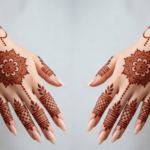
Mandala-centered designs — intricate circular mandala compositions centered on the palm, with radiating design elements extending outward across the hand and fingers. The mandala form has become one of the most celebrated mehndi motifs in the fusion tradition, combining mathematical precision with organic floral beauty.
4. Rajasthani and Mughal Luxury Mehndi — Heritage and Grandeur
Rajasthani mehndi is the most densely worked and historically rich of the luxury mehndi traditions — characterized by full-coverage designs featuring elephants, peacocks, dancing figures (dancing brides and grooms are a Rajasthani specialty), elaborate borders, and the most intricate fine-line work of any regional style.
Mughal-inspired luxury mehndi draws from the extraordinary tradition of Mughal decorative arts — the architecture of the Taj Mahal, the illuminated manuscripts of the Mughal courts, the intricate garden designs — producing mehndi patterns with a specific grandeur and mathematical complexity that is deeply connected to a magnificent cultural heritage.
Both styles represent the richest end of the luxury mehndi spectrum — designs that require the most experienced artists, the most time, and the finest paste, but that produce results of genuinely museum-worthy beauty.
5. Gulf-Style Luxury Mehndi — Structured Opulence
Gulf or Khaleeji mehndi style has emerged as one of the most influential luxury mehndi aesthetics of 2026, driven by the Gulf region’s significant presence in contemporary luxury and fashion culture. Gulf-style mehndi is characterized by:
Bold, clean outlines — heavier line weight than Indian or Arabic styles, creating strong visual presence that reads beautifully from a distance.
Glitter and gemstone integration — luxury Gulf mehndi frequently incorporates gold or silver glitter, colored rhinestones, and gem-like embellishments applied into and around the henna pattern after it has dried. The result is a design that combines the organic beauty of henna with the sparkle of jewelry in a seamlessly integrated way.
Finger-to-wrist coverage — Gulf mehndi designs often focus heavily on the fingers and wrist, with elaborate individual finger designs connected by a central wrist focal point.
Choosing the Right Luxury Mehndi Design for Your Event
Different events call for different levels of mehndi elaboration and different stylistic choices.
For Bridal Mehndi
Full coverage, maximum intricacy, traditional motifs with personal significance. Work with your mehndi artist in advance — a good bridal mehndi consultation involves discussing design preferences, reviewing the artist’s portfolio, communicating any specific motifs you want included, and understanding the time commitment required. Book the best artist you can access and budget for quality — bridal mehndi is photographed and remembered for a lifetime.
For Wedding Guest Mehndi
Medium coverage designs — full back-of-hand with finger detailing and a wrist element — are ideal for wedding guests who want to participate in the mehndi tradition without the full bridal elaboration. Arabic floral and fusion styles are particularly popular for guest mehndi.
For Eid and Festive Occasions
Bold, celebratory designs in Arabic or fusion style — designs that are beautiful and visible without requiring the application time of bridal mehndi. The festive occasion calls for joy and beauty rather than ceremonial depth.
For Formal Events and Galas
Contemporary fusion or minimalist luxury mehndi designs are the most appropriate for secular formal occasions — beautiful and clearly skillfully executed without the cultural specificity of traditional ceremonial styles.
Preparing for Your Luxury Mehndi Application
The quality of your mehndi stain depends as much on preparation as it does on the henna paste itself.
Exfoliate the application area. In the two to three days before your mehndi appointment, gently exfoliate the hands and any other areas to be adorned. Fresh, smooth skin accepts henna most effectively and produces the deepest stain.
Avoid oil and lotion on the day. Do not apply any oil, lotion, or cream to the hands on the day of your appointment. Oil creates a barrier between the skin and the henna paste that reduces stain depth.
Wear or bring comfortable, loose clothing. Mehndi application can take several hours. Wear something comfortable that will not need to be pulled over wet henna when you leave.
Plan your schedule. The henna paste must remain on the skin for as long as possible — ideally four to eight hours — to produce the deepest stain. Plan your appointment so you can keep the paste on for the full recommended time. Many artists recommend applying mehndi the evening before an event and sleeping with the paste on (covering with a breathable wrap) for maximum color development.
Warm the skin before application. Skin that is warm produces a better stain than cold skin. Stay warm, or warm the application areas gently before the session.
How to Care for Luxury Mehndi After Application
Aftercare is where the depth and longevity of your luxury mehndi stain is determined.
While the Paste Is Still On
Do not let the paste crack and fall off prematurely. Keep the paste moist — many artists apply a mixture of lemon juice and sugar over the dry paste to keep it pliable and adherent. A thin application of this mixture every hour or so prevents premature cracking.
Keep warm. Warmth helps the lawsone dye transfer from the paste to the skin. If possible, keep the application areas warm throughout the paste-wearing period.
Avoid water. Do not wash the hands or feet while the paste is on. Water interrupts the dye transfer process.
Removing the Paste
Scrape, do not wash. When it is time to remove the paste, scrape it off using a blunt implement — the back of a spoon, an orangewood stick, or simply your fingers. Do not wash it off with water. Washing at this stage interrupts the oxidation process through which the stain deepens.
Apply oil immediately after scraping. Coconut oil, olive oil, or any natural oil applied to the stain immediately after scraping protects it and helps it develop its full depth.
After Removal — Deepening the Stain
Avoid water for as long as possible — ideally 24 hours — after removing the paste. Water exposure at this stage is the primary factor in limiting stain depth.
Apply oil or balm regularly in the days following application. Natural oils protect the stained skin from the exfoliation that reduces the stain’s lifespan.
Avoid swimming, prolonged handwashing, and exfoliating products for the first week. Chemicals in pool water particularly damage fresh mehndi stains.
Expose to warmth. Gentle heat — sunlight, a warm room — continues to deepen the oxidizing stain in the days after application.
The Most Beautiful Luxury Mehndi Motifs and Their Meanings
Understanding the symbolic vocabulary of luxury mehndi adds depth to the aesthetic appreciation of the designs.
The Peacock (Mor): The most beloved and most frequently used mehndi motif. The peacock represents beauty, grace, love, and prosperity. In bridal mehndi, a pair of peacocks facing each other is one of the most auspicious and beautiful compositions.
The Lotus (Kamal): Representing purity, spiritual enlightenment, and new beginnings — perfect for bridal and new-chapter mehndi. The lotus is typically shown in full bloom, rendered with extraordinary petal detail in luxury applications.
The Mango / Paisley (Buta / Keri): One of the oldest and most culturally significant mehndi motifs, representing fertility and good luck. The paisley shape’s elegant curve and the infinite possibilities for interior pattern work make it one of the most versatile elements in any luxury mehndi design.
Vines and Leaves (Bail): Representing devotion, vitality, and the continuous flow of life. Vine work is the connective tissue of most luxury mehndi designs — the element that gives the composition flow and coherence.
The Moon and Stars (Chand Tara): Representing beauty, femininity, and divine light. Moon and star motifs appear frequently in Arabic and fusion luxury mehndi and have particular resonance for designs worn during Eid and other celestial-referenced celebrations.
Elephants (Haathi): Representing strength, wisdom, loyalty, and good fortune. Elephant motifs — particularly the gajra (elephant procession) — are characteristic of the most elaborate Rajasthani luxury bridal designs.
Checkered and Geometric Patterns: Used as fill elements within larger motifs, geometric patterns represent mathematical harmony, order, and the divine proportion that underlies all of nature’s beauty.
Finding and Working with a Luxury Mehndi Artist
The quality of the artist is the most important factor in the quality of your luxury mehndi. Here is how to identify, evaluate, and work with the best.
Review the portfolio carefully. Look for work that demonstrates the specific qualities of luxury mehndi: fine line work, compositional architecture, pattern density, and the range of styles the artist can execute. A strong portfolio will include close-up photography that allows you to assess line quality — the most reliable indicator of true skill.
Look for specialized training and experience. The best luxury mehndi artists have trained formally or apprenticed under established artists, and have years of experience with specifically the event and bridal mehndi category. Experience with the specific style you want — whether Rajasthani, Arabic, fusion, or another — is more valuable than general mehndi experience.
Book far in advance. The best luxury mehndi artists are booked months ahead for weddings and major events. Bridal mehndi bookings with sought-after artists sometimes need to be made six to twelve months before the event.
Discuss in detail. A pre-appointment consultation — in person or via video call — is essential for luxury bridal and formal event mehndi. Bring reference images, communicate your vision, share any specific motifs that are meaningful to you, and clarify the time available for the application session.
Understand the investment. Luxury mehndi is a skilled art form that takes years to develop and hours to apply. The appropriate budget reflects the artist’s experience, skill, and the time required — treating it as an investment rather than an expense produces the best outcomes.
Frequently Asked Questions
How long does luxury mehndi last? With premium henna paste and proper aftercare, luxury mehndi typically lasts two to four weeks. The stain darkens through oxidation in the first 48 hours after application, reaching its deepest color approximately 24 to 48 hours after the paste is removed. It then gradually fades as the stained skin naturally exfoliates.
Is luxury mehndi safe for all skin types? Natural henna (made from Lawsonia inermis without any additives) is safe for the vast majority of skin types. However, “black henna” — which contains PPD (para-phenylenediamine) — can cause serious skin reactions and should always be avoided. Premium luxury mehndi artists use only natural henna paste. If you have known skin sensitivities, request a patch test.
Can mehndi be applied to any part of the body? Mehndi is traditionally and most effectively applied to the hands and feet, where the thicker skin and higher concentration of body heat produce the deepest, most beautiful stains. It can be applied elsewhere on the body with slightly lighter results.
How many hours before an event should mehndi be applied? For bridal mehndi, the night before the wedding ceremony — allowing the paste to remain on overnight — is ideal. For other events, applying at least 24 to 48 hours before the event allows the stain to fully develop and oxidize to its deepest color.
What is the difference between bridal mehndi and regular mehndi? The difference is primarily in the scale, density, and time investment of the design. Bridal mehndi typically covers both hands and feet completely, may extend to the arms and legs, incorporates personally significant motifs, and takes four to eight hours to apply. Regular event mehndi might cover one hand, take one to two hours, and be designed for a specific aesthetic rather than cultural ceremony.
Can men have luxury mehndi applied? Yes — mehndi traditions for grooms exist in many cultures, though the designs are typically less elaborate than bridal mehndi and often focused on specific areas such as the hand or wrist. Increasingly, contemporary groom mehndi with bold, architectural designs is a growing category.
Final Thoughts
Luxury mehndi is one of the most extraordinary intersections of art, culture, beauty, and personal meaning available in the contemporary world. It is simultaneously ancient and urgently contemporary — a practice that has been refined over thousands of years and yet continues to evolve, absorb new influences, and express new aesthetic possibilities with every artist, every design, and every event it graces.
The designs celebrated in this guide — from the full-coverage grandeur of traditional bridal mehndi to the refined precision of contemporary fusion styles, from the bold floral confidence of Arabic luxury mehndi to the mathematical intricacy of Mughal-inspired compositions — represent the pinnacle of what this art form can achieve when exceptional skill, premium materials, and genuine artistic vision come together.
Whatever your event, whatever your aesthetic, whatever your relationship to the cultural tradition from which mehndi springs — if you are drawn to this art, it will serve you beautifully. Find the right artist, give the process the time it deserves, care for the stain with attention, and arrive at your event with something on your hands that is genuinely, unmistakably extraordinary.
Save your favorite designs before your next event. Your hands deserve this kind of beauty.