
Gel nail polish is one of the best things to ever happen to manicures — the glossy, chip-resistant finish that lasts two to three weeks without a single touch-up is genuinely transformative for anyone who has ever watched a regular polish manicure chip within 48 hours. But the flip side of that extraordinary staying power is that when it is time for removal, gel does not simply wipe away. It requires a specific process, the right supplies, and enough patience to let the chemistry do its work.
Remove gel nail polish incorrectly — by peeling, scraping, or forcing it off — and you risk stripping away layers of your natural nail plate, leaving nails thin, weak, sensitive, and prone to breakage for weeks afterward. Remove it correctly, using the soak-off method described in this guide, and your natural nails emerge largely unaffected, healthy, and ready for whatever comes next.
This comprehensive guide covers everything you need to know about how to soak off gel nail polish at home: the science behind why the soak-off process works, every supply you need, multiple methods in full step-by-step detail, tips for making the process faster and more effective, the most common mistakes and how to avoid them, and the aftercare routine that keeps your nails in great condition after removal. Whether this is your first time removing gel at home or you’re looking to refine a process you’ve been doing for years, this guide has you covered.
Why Gel Nail Polish Requires Soaking
Understanding why gel polish needs to be soaked off — rather than simply wiped away like regular polish — helps you approach the removal process with the right expectations and technique.
Regular nail polish forms a temporary, physically adherent film on the nail surface. It bonds through simple adhesion and can be dissolved by standard solvents like acetone or ethyl acetate in seconds, because the polymer chains in the polish are relatively short and accessible to the solvent molecules.
Gel nail polish is chemically different in a fundamental way. When gel polish is cured under a UV or LED lamp, the liquid formula undergoes photopolymerization — a chemical reaction triggered by the UV light that causes the individual monomer molecules in the gel to link together into long, cross-linked polymer chains. These chains are dense, interwoven, and chemically bonded to each other and to the nail surface in a way that regular polish simply is not.
This cross-linked polymer structure is what gives gel its extraordinary durability. It also means that removing it requires breaking down those polymer chains — a process that takes time and the right solvent. Acetone is uniquely effective for this because its molecular structure allows it to penetrate the cross-linked gel matrix and disrupt the bonds from within, gradually softening the gel until it can be pushed away from the nail. No other widely available household solvent does this as effectively.
The soak-off process is essentially the deliberate, controlled application of acetone for long enough to allow this penetration and softening to occur across the full thickness of the gel layer.
What You Need to Soak Off Gel Nail Polish
Having everything assembled before you begin makes the process significantly smoother and reduces the temptation to cut corners. Here is a complete list of everything you need:
Essential supplies:
- 100% pure acetone (not regular nail polish remover, which is too diluted for gel removal)
- Cotton balls or cotton pads
- Aluminum foil cut into small rectangles (approximately 3 × 5 inches — enough to wrap around a fingertip)
- A nail file (180-grit for regular gel; coarser for builder gel or shellac)
- A soft nail buffer
- A cuticle pusher or orangewood stick
- Cuticle oil
- Hand cream or moisturizer
Optional but helpful:
- Nail soaking clips (reusable plastic clips that hold cotton in place without foil)
- A glass or ceramic bowl (for the bowl soak method)
- Petroleum jelly or cuticle oil (to protect the skin around nails during soaking)
- A nail brush (for cleaning up residue)
- Warm water in a larger bowl (to warm the acetone and speed up the process)
- Gloves (for handling acetone if you have sensitive skin)
What to avoid:
- Regular nail polish remover — the acetone concentration is insufficient for gel
- Plastic bowls — acetone dissolves certain plastics
- Metal tools for scraping — these can gouge the nail surface
Before You Begin: Preparing Your Nails
Proper preparation is the step most people skip, and it is one of the most important parts of the entire process. Taking five minutes to prepare your nails correctly makes the actual soak significantly faster and more effective.
Step 1: Assess Your Gel
Look closely at your gel polish. Is it a standard soak-off gel (the most common salon format)? Shellac? Builder gel or hard gel extension? This matters because:
- Standard soak-off gel responds well to acetone soaking within 10 to 15 minutes
- Shellac (a hybrid gel-polish formula) also soaks off with acetone but may take slightly longer
- Hard gel or builder gel does NOT dissolve in acetone and must be filed away rather than soaked — if you have extensions or structured overlays, this guide applies only to any soft gel top coat or color layers over them
When in doubt, if your gel was applied at a salon, ask your technician what type of gel was used.
Step 2: Break the Seal
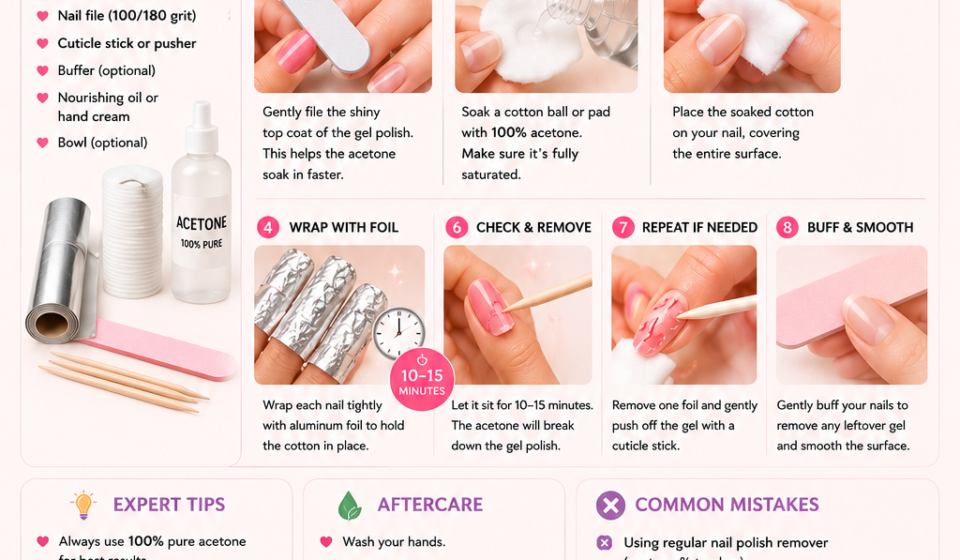
This is the most important preparatory step. Gel polish has a shiny, sealed top coat surface that acetone cannot easily penetrate without some help. Using your 180-grit nail file, gently buff the surface of each nail to remove the shine and break the seal of the top coat layer.
You are not trying to file off the gel — just roughen the surface enough that acetone can begin penetrating immediately rather than sitting on top. Use light pressure and short strokes, covering the entire nail surface. When the shine is gone and the nail surface looks matte and slightly powdery, the seal is broken.
Critical note: Be gentle. You are filing gel, not natural nail. If you file too aggressively or too deeply, you risk thinning your natural nail beneath the gel layer. Three to five gentle passes across the surface are usually sufficient.
Step 3: Protect the Surrounding Skin
Acetone is highly drying and can cause irritation to the skin around your nails with prolonged exposure. Before soaking, apply a thin layer of petroleum jelly, cuticle oil, or a thick hand cream around each nail — on the cuticle, the sides of the nail, and the fingertip — but not on the nail surface itself. This creates a protective barrier that prevents the acetone from drying out the surrounding skin during the soak.
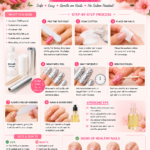
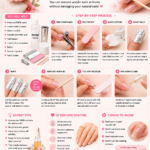
Method 1: The Foil Wrap Method (Most Recommended)
The foil wrap method is the gold standard for at-home gel removal. It keeps acetone in sustained, direct contact with each nail, traps heat that accelerates the softening process, and allows you to treat all ten nails simultaneously. It is the method used professionally in most salons and produces the most consistently reliable results.
Step 1: Cut Your Foil
If you haven’t already, cut your aluminum foil into rectangles large enough to wrap around the tip of a finger — approximately 3 inches wide and 5 inches long. You need ten pieces, one for each finger.
Step 2: Saturate the Cotton
Tear or cut your cotton balls or pads into pieces roughly the size of each nail. Saturate each piece generously with 100% acetone. The cotton should be fully soaked — if you squeeze it, acetone should be on the verge of dripping. Insufficient acetone is the most common reason the soak-off process fails or takes much longer than it should.
Step 3: Apply and Wrap
Place one saturated cotton piece directly over a nail, ensuring it covers the entire nail surface from cuticle to tip. Immediately wrap the foil rectangle tightly around the fingertip, holding the cotton securely in place. The foil should be snug — if the cotton can shift or fall away from the nail, the soak will be uneven.
Repeat for all ten fingers. Most people find it easiest to do one hand at a time, completing all five wraps before moving to the other hand.
Step 4: Wait — Fully and Patiently
This is the step that determines the success of the entire process, and it is the step most people get wrong by rushing. Leave the wraps on for a full 10 to 15 minutes for standard soak-off gel. For thicker gel builds, older gel that has been on the nail for more than three weeks, or shellac, allow up to 20 minutes.
Do not remove the wraps to check on progress before the minimum time has elapsed. Every time you remove and rewrap, you are breaking the heat seal that accelerates the process and allowing fresh air to reach the acetone-soaked cotton, reducing its effectiveness.
Set a timer. Use the waiting time to read, watch something, or simply rest. Patience here pays enormous dividends in the ease of the next step.
Step 5: Test One Nail First
When your timer goes off, remove one foil wrap and gently press the cotton against the nail as you pull it away. Using your cuticle pusher or orangewood stick, attempt to gently push the gel from the cuticle end toward the tip. If the gel has softened properly, it should slide away easily — almost like soft, slightly gummy material that rolls off the nail without resistance.
If it does not come away easily, rewrap that finger and wait an additional five minutes before trying again. Never force, scrape, or apply significant pressure. The gel should slide, not scrape.
Step 6: Remove All Nails
Working one nail at a time, remove each foil wrap, bring the cotton with it (it will often pull away some of the dissolved gel on its own), and use the cuticle pusher to gently slide the remaining gel from base to tip. Keep the pressure light and consistent — think of pushing soft putty rather than scraping something stuck.
Step 7: Address Stubborn Areas
If any areas of gel remain after the initial removal attempt, do not scrape harder. Instead, re-saturate a small piece of cotton with fresh acetone, hold it directly against the stubborn area for an additional two to three minutes, then try again. Small remaining sections almost always come away cleanly with a brief additional soak.
Step 8: Buff Away Residue
Once all the gel has been removed, use a soft nail buffer to gently smooth the nail surface. There will typically be a thin film of residue and some roughness from the original file work. Two to three gentle passes with a fine buffer restores smoothness without removing natural nail material.
Step 9: Wash and Moisturize
Wash both hands thoroughly with mild soap and warm water to remove all acetone residue. The smell of acetone and any remaining film should rinse away completely. Pat hands dry and immediately apply a generous amount of cuticle oil to each nail bed, massaging it in for 30 to 60 seconds per nail. Follow with hand cream applied to the full hand. This aftercare step is not optional — it is essential for nail health after acetone exposure.
Method 2: The Bowl Soak Method
The bowl soak method is a less fiddly alternative that doesn’t require foil preparation. It is particularly useful if you find the foil wrapping process frustrating or if you’re removing gel from toenails, where the foil wrap is more awkward to apply.
The tradeoff is that the bowl soak exposes more of your hand and fingers to acetone than the targeted foil method, which increases drying of the surrounding skin.
Step 1: Prepare the Bowl Setup
Pour enough 100% acetone into a glass or ceramic bowl to fully submerge your fingernails — typically about half an inch of acetone. Do not use plastic bowls, as acetone will dissolve or damage certain plastics.
To warm the acetone (which meaningfully accelerates the soak-off process), place the acetone bowl inside a slightly larger bowl containing warm — not hot — water. The warm water bath heats the acetone without any fire risk. Never apply direct heat to acetone, as it is highly flammable.
Step 2: Protect Your Skin
Apply petroleum jelly or a thick barrier cream generously to all the skin on your fingers and hand — everywhere except the nail surface itself. With the bowl method, more skin is exposed to acetone for the duration of the soak, making this skin protection step more important than in the foil method.
Step 3: Soak
Submerge your fingertips in the acetone, ensuring all nails are in contact with the solvent. Hold your fingers steady — moving them around excessively disturbs the acetone’s contact with the nail surface and reduces effectiveness.
Soak for 10 to 20 minutes, checking one nail after 10 minutes to assess progress. When the gel has softened, it will appear wrinkled or bubbled on the nail surface, and the edges may have begun lifting away from the nail spontaneously.
Step 4: Remove Gel
Remove one hand from the bowl and immediately begin removing the softened gel with your cuticle pusher before it has a chance to re-harden as the acetone evaporates. Work quickly but gently. If the gel starts to harden before you’ve finished all five nails, re-submerge briefly.
Step 5: Buff, Wash, Moisturize
Follow the same finishing steps as the foil method: buff gently, wash thoroughly, apply cuticle oil and hand cream immediately and generously.
Method 3: Using Gel Nail Removal Clips
Nail removal clips are reusable plastic clamps specifically designed to hold an acetone-soaked cotton pad against the nail without requiring foil. They are an increasingly popular choice for regular at-home gel removers because they are convenient, produce no waste, and are just as effective as the foil method.
How to Use Removal Clips
The process is identical to the foil method — file the surface, protect the skin, saturate cotton with acetone, position it against the nail — but instead of wrapping with foil, you simply clip the removal clip over the fingertip to hold the cotton in place.
Clips come in different sizes to fit different finger widths. When purchasing, look for clips with a firm clasp that holds the cotton securely without allowing it to shift during the soak.
Wait the same 10 to 15 minutes, then remove each clip and proceed with the cuticle pusher, buffer, wash, and moisturize sequence.
Clips are washable, reusable, and considerably more eco-friendly than single-use foil squares — a worthwhile investment for anyone who removes gel at home regularly.
How to Speed Up the Gel Soak-Off Process
If you’re looking to shorten the soak time without compromising results, several legitimate techniques genuinely accelerate the process:
Warm the acetone. Warm acetone is significantly more active than room-temperature or cold acetone. The water bath setup described in the bowl soak method can also be used with the foil method — simply place your wrapped hands over a bowl of warm water or rest them against a warm surface during the soak. The additional heat measurably shortens the time required.
File more thoroughly. The more thoroughly you break the seal and roughen the gel surface in the preparation step, the faster acetone penetrates. If you’re consistently finding that 15 minutes isn’t enough, try more thorough filing before the next removal.
Use fresh acetone. Acetone that has been sitting in an open bottle or has been contaminated with polish residue from previous removals is less effective than fresh product. If you’ve had your acetone bottle for more than six months or have been using the same bottle without a secure cap, try a fresh bottle.
Ensure the cotton is fully saturated. The most common cause of a slow or incomplete soak is insufficient acetone on the cotton. The cotton should be genuinely soaked — use more than you think you need rather than trying to conserve product.
Wrap tightly. A loose foil wrap allows heat to escape and may permit the cotton to shift away from the nail surface. Wrap firmly and ensure the foil is sealed against the finger on all sides.
How to Remove Gel Polish Without Acetone
If you do not have acetone available or prefer to minimize chemical exposure, there are limited options:
Filing down the gel is the only genuinely effective non-acetone approach. Using a 150 to 180-grit file, you can gradually file away the gel layer by layer until only the natural nail remains. This approach requires patience and skill — filing too aggressively can thin the natural nail. Work slowly, checking progress frequently, and stop the moment you feel the texture change (from gel to natural nail). This method is more commonly used for hard gel that does not soak off at all, and it requires comfort with the sensation of the file to avoid nail damage.
Non-acetone nail polish remover does not effectively remove gel polish. It lacks the solvent activity needed to penetrate and dissolve the cross-linked gel polymer. Attempting gel removal with non-acetone remover typically produces no meaningful result after prolonged soaking.
The Most Common Gel Removal Mistakes
Peeling the Gel Off
This is the most damaging mistake in gel removal. When gel is peeled or lifted off the nail, it brings the top layers of the natural nail plate with it — the two surfaces are bonded, and peeling separates them together rather than at the interface. The result is a nail that is visibly thinner, feels rough and tender, and is significantly more vulnerable to breakage. This damage can take months to grow out. No matter how tempting the peeling feels when the gel is lifting at the edges, resist it entirely.
Not Filing the Surface First
Skipping the surface filing step leaves the shiny, sealed top coat intact, which significantly reduces acetone penetration. What should take 10 to 15 minutes may take 25 to 30 — and the result is often incomplete removal that still requires scraping. Two minutes of filing saves significant time and frustration.
Using Too Little Acetone
A slightly damp cotton ball will not produce the same result as a fully saturated one. Acetone is inexpensive — use generously, not sparingly.
Removing the Wraps Too Early
Impatience is the enemy of clean gel removal. Ten minutes is the minimum, not the target. If you remove the wraps at eight minutes and find the gel resistant, you haven’t saved time — you’ve added it, because you now need to rewrap and wait longer.
Scraping Resistant Gel
If the gel does not come away easily with gentle pressure, it is not ready. Scraping harder removes nail along with gel. Rewrap and wait. Always.
Skipping Aftercare
Acetone is genuinely harsh on nails and skin. Skipping the cuticle oil and hand cream after removal leaves nails dry, brittle, and the skin around them tight and irritated. This aftercare is as important as the removal process itself.
Aftercare: Restoring Nail Health After Gel Removal
The period immediately after gel removal is when your nails are most vulnerable and most receptive to care. What you do in the first hour after removing gel has an outsized impact on how quickly your nails recover and how healthy they remain.
Cuticle oil — immediately and generously. Apply a drop of cuticle oil to each nail bed as soon as your nails are clean. Massage it in for at least 30 seconds per nail. Repeat twice more throughout the day of removal, and continue twice-daily application for at least the following week.
Rich hand cream — right away and often. Acetone strips moisture from the entire hand, not just the nails. A generous hand cream application immediately after washing removes the last of the acetone and begins replenishing the skin’s moisture barrier.
Let nails breathe if possible. If you are not going straight back into gel, allow your nails a bare period — ideally one to two weeks — before the next gel application. During this time, a strengthening base coat applied to bare nails provides both protection and reinforcement.
Avoid prolonged water exposure. Freshly de-gelled nails are particularly vulnerable to the repeated expansion and contraction that comes with prolonged water exposure. Wear gloves for dishwashing and cleaning for the first few days after removal.
Eat and drink for nail recovery. Increasing protein, biotin, and water intake in the weeks after gel removal supports faster nail plate recovery and more resilient regrowth.
Don’t panic about temporary thinning. Some mild surface thinning after gel removal is normal and expected — particularly if gel has been worn continuously for many months. This is temporary. With consistent care, nails restore to their natural thickness within four to six weeks.
How Often Should You Remove and Reapply Gel?
Most gel polish should be removed and reapplied every two to three weeks. By this point, the gel has typically grown away from the cuticle sufficiently to require a new application, and leaving gel on beyond three weeks increases the risk of moisture getting trapped beneath lifting edges, which can lead to bacterial or fungal issues.
Allowing at least one to two weeks of bare nail time between gel applications every two to three months gives the natural nail plate time to recover its full strength and thickness and prevents the cumulative thinning that extended continuous gel wear can cause.
Frequently Asked Questions
Can I use regular nail polish remover instead of acetone to soak off gel? Regular nail polish remover — whether acetone-based at low concentration or non-acetone — is not effective for gel removal. The acetone concentration in regular remover is too low to penetrate and dissolve the cross-linked gel polymer. You need 100% pure acetone for reliable gel removal.
How do I know when the gel is ready to come off? The gel is ready when it looks wrinkled, slightly bubbled, or has begun lifting at the edges, and when gentle pressure from a cuticle pusher causes it to slide away from the nail without resistance. If it requires force or scraping, it needs more soak time.
Does soaking off gel damage your nails? The soaking process itself — when done correctly with properly saturated cotton and adequate time — does not significantly damage the nail. The acetone causes temporary dryness, which is addressed with aftercare. The damage associated with gel removal almost always comes from improper technique: primarily from peeling or scraping gel that hasn’t fully softened.
How long does gel nail removal take at home? From preparation to finished aftercare, the full process typically takes 30 to 45 minutes. This includes five minutes of preparation and filing, 10 to 20 minutes of soaking, five to ten minutes of removal and buffing, and five minutes of aftercare.
Why won’t my gel come off even after soaking? If gel does not soften after 20 minutes of soaking with 100% acetone, it may be hard gel or builder gel rather than standard soak-off gel — these formulas do not dissolve in acetone and must be filed away. Other causes include insufficient surface filing before soaking, too little acetone on the cotton, or a loose foil wrap that allowed the acetone to evaporate prematurely.
Is it better to remove gel at home or at a salon? Both can produce excellent results when done correctly. Professional removal has the advantage of a trained technician who can identify the gel type, assess the nail condition, and adjust technique accordingly. At-home removal gives you control of the process, timing, and cost. With the technique described in this guide, at-home removal is entirely safe and effective for standard soak-off gel.
Final Thoughts
Soaking off gel nail polish at home is a completely manageable process when you have the right supplies, the right technique, and — most importantly — the patience to let the acetone do its job. The foil wrap method remains the most reliable and consistent approach, delivering clean, complete removal without nail damage when followed properly.
The two rules that matter most, above everything else in this guide: never peel, always soak — and always moisturize when you’re done. Follow these two principles, give the acetone the time it needs, and your natural nails will come through every gel removal healthy, smooth, and ready for whatever comes next.
Your nails deserve the care it takes to remove gel properly. A few extra minutes of patience at removal time saves weeks of recovery from damage. That is a trade worth making every time.