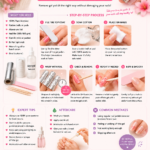

Acrylic nails are one of the most transformative nail services available — capable of adding instant length, perfect shape, and a flawless canvas for nail art that natural nails alone can rarely provide. But as beautiful as they are when freshly applied, there inevitably comes a time when you need them off. Maybe they have grown out to the point where the gap at the cuticle is too noticeable to ignore. Maybe one has broken. Maybe you simply want to give your natural nails a rest. Or maybe a salon appointment just isn’t going to happen right now.
Whatever your reason, the question is always the same: can you take acrylic nails off at home safely, without destroying your natural nails in the process?
The answer is yes — with the right technique, the right supplies, and the right level of patience. Acrylic nails are not removable by simply peeling or forcing them off without causing serious nail damage, but they are absolutely removable at home when the proper method is followed. This guide covers every aspect of safe at-home acrylic nail removal — the science behind why acrylics are so durable, the supplies you need, multiple full step-by-step methods, tips for making the process faster, the mistakes that cause damage, and the aftercare routine that gets your natural nails back to health after removal.
Understanding Acrylic Nails: Why They’re So Hard to Remove
Before diving into removal methods, it helps to understand what you’re actually dealing with when you try to remove an acrylic nail.
Acrylic nails are created by combining a liquid monomer (typically ethyl methacrylate) with a powder polymer to create a moldable, paste-like substance that can be shaped over the natural nail or a nail form. As the mixture is applied and exposed to air, it undergoes a chemical reaction — polymerization — that causes it to harden into a rigid, durable material with an extremely strong bond to the nail surface beneath it.
This hardened acrylic is significantly denser and more chemically robust than gel polish. It does not simply dissolve in acetone the way gel does — rather, acetone gradually swells and softens the acrylic over time, breaking down the polymer structure enough that the softened material can be gently pushed or scraped away. This is a fundamentally different process from the way acetone removes gel, and it requires more time and more product.
The bond between the acrylic and your natural nail is one of the strongest in the nail world — which is why forcing an acrylic off, peeling it, or prying it away causes such severe nail damage. The acrylic and natural nail are essentially welded together, and tearing them apart takes your nail surface with it.
What You Need to Remove Acrylic Nails at Home
Assembling the right supplies before you begin is essential. Having everything within reach means you won’t need to unwrap, get up, or compromise the process partway through.
Essential supplies:
- 100% pure acetone (not regular nail polish remover — the acetone concentration in standard remover is far too low for acrylic removal)
- Nail clippers
- A coarse nail file (100 to 150-grit) for filing down length
- A medium nail file (180-grit) for surface work
- A soft nail buffer
- Cotton balls or cotton pads
- Aluminum foil cut into fingertip-sized rectangles, OR nail soaking clips
- A cuticle pusher or orangewood stick
- Cuticle oil (generous amounts)
- Rich hand cream or moisturizer
- Petroleum jelly or cuticle oil for skin protection
Optional but helpful:
- A glass or ceramic bowl (for the bowl soak method)
- Warm water in a larger bowl (to warm the acetone)
- Nail repair treatment or strengthening base coat
- A nail brush for cleanup
- Gloves if you have very sensitive skin
Before You Begin: Essential Preparation Steps
Clip Down the Length
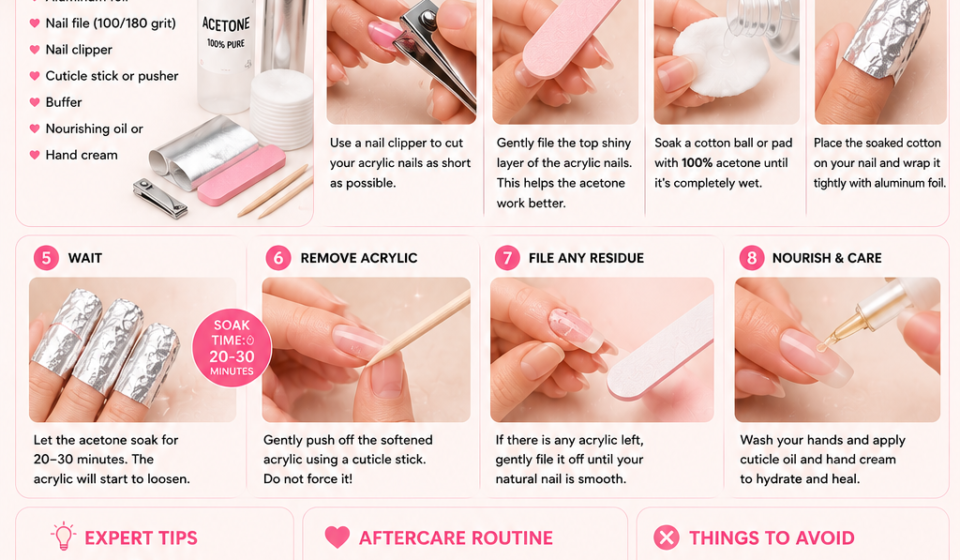
Acrylic nails, particularly if they have grown long, have a significant amount of acrylic material above the fingertip that does not need to be soaked — it can be clipped away. Using your nail clippers, clip the acrylic nails as short as possible without cutting into the natural nail beneath. The less acrylic material remaining, the less soaking time and effort the removal process will require.
Be careful when clipping — acrylic can sometimes crack or splinter rather than cutting cleanly. Clip slowly and deliberately, and if the acrylic is very thick, make several smaller cuts rather than one large one to avoid cracking.
File Down the Surface
Using your coarse 100 to 150-grit file, file the top surface of each acrylic nail aggressively enough to remove the shine and thin down the bulk of the acrylic layer. Unlike gel polish preparation, where you simply break the seal, with acrylics you want to actually reduce the thickness significantly — filing away as much of the bulk as you can before soaking makes the entire process dramatically faster.
File until the surface is completely matte and the acrylics feel noticeably thinner. Be careful as you get closer to the nail bed — the sensation of the file changes as you approach the natural nail layer, and at that point you should stop filing and transition to soaking.
Protect the Skin
Apply petroleum jelly or a thick cuticle oil generously to all the skin surrounding each nail — the cuticle area, the sides of the nail, and the fingertip. Acetone is highly drying and will be in contact with your skin for an extended period during acrylic removal. This barrier protection prevents excessive dryness and irritation.
Avoid getting petroleum jelly on the acrylic surface itself, as it can prevent acetone from penetrating effectively.
Method 1: The Acetone Foil Soak Method (Most Recommended)
The foil soak method is the safest and most widely used technique for at-home acrylic removal. It provides sustained, concentrated acetone contact with each nail while trapping heat that accelerates the softening process.
Step 1: Saturate the Cotton
Cut or tear cotton balls into pieces roughly the size of each nail. Pour 100% acetone onto each piece until it is fully, generously soaked — not just damp. Insufficient acetone is the single most common reason this process fails or takes much longer than it should.
Step 2: Apply and Wrap
Place a saturated cotton piece directly over the nail, covering the entire surface from cuticle to tip. Wrap a rectangle of aluminum foil tightly around the fingertip to hold the cotton firmly in place and create a sealed environment that traps heat and slows acetone evaporation.
The foil wrap should be snug — if the cotton can move or fall away from the nail surface, the soak will be uneven. Work on one hand at a time, wrapping all five fingers before moving to the other hand.
Step 3: Wait — This Is Where Patience Becomes Non-Negotiable
Here is where acrylic removal differs most significantly from gel removal: the waiting time is considerably longer. Acrylic requires 25 to 40 minutes of soak time to soften adequately for safe removal — significantly more than the 10 to 15 minutes that gel requires.
Set a timer for 25 minutes as a starting point for standard acrylic thickness. Thicker builds, older acrylics, or larger nail surfaces may require the full 40 minutes. Do not attempt to check or remove early — the additional time is not wasted, it is essential.
The heat trapped by the foil accelerates the process meaningfully. Keep your wrapped hands still during the soak — movement breaks the heat seal and reduces the acetone’s contact consistency.
Step 4: Check One Nail
When your timer goes off, remove one foil wrap and test the acrylic using a cuticle pusher or orangewood stick. Gently press the tool against the edge of the acrylic where it meets the skin and apply light pressure.
If the acrylic has softened properly, it will feel slightly gummy or rubbery — like soft wax or very thick gel — and should begin to slide away from the nail surface with gentle pressure from the cuticle pusher. If it resists with any force, it is not ready. Rewrap and wait another five to ten minutes.
The softened acrylic should never require significant force to remove. If you are pushing hard, you are not finished soaking.
Step 5: Gently Push Away the Softened Acrylic
Working one nail at a time, unwrap each finger and immediately use the cuticle pusher to gently slide the softened acrylic away from the nail surface. Work from the cuticle end toward the tip using smooth, gliding strokes with very light pressure.
The acrylic should come away in soft, putty-like chunks or rolls. Some sections may need a second gentle pass. If a section resists, do not force it — re-wrap that nail with fresh acetone-soaked cotton and wait another five minutes.
Step 6: Deal with Stubborn Sections
After the main body of the acrylic has been removed, there will typically be a thin residual film or some stubborn sections near the edges that need additional attention. Apply a small piece of fresh acetone-soaked cotton directly to these areas, hold for two to three minutes, then gently push again. Stubborn sections almost always yield to brief additional soaking.
Step 7: Buff Away All Residue
Once all the acrylic is removed, you will likely see some roughness, some thin residual film, and possibly some surface unevenness on the natural nail. Using your 180-grit file followed by a soft nail buffer, gently smooth the nail surface with light, even passes. Two to three passes is sufficient — over-buffing thins an already-compromised nail plate further.
Step 8: Wash and Immediately Moisturize
Wash both hands thoroughly with mild soap and warm water to remove all acetone residue and acrylic particles. Pat completely dry. Immediately — without delay — apply cuticle oil to every nail and massage it in for 30 to 60 seconds per nail. Follow with rich hand cream applied generously over the entire hand. This step is not a finishing touch — it is a critical component of the removal process that protects your nail health.
Method 2: The Acetone Bowl Soak Method
The bowl soak method is a hands-free alternative that some people find more comfortable than the foil wrapping process, particularly for longer soak times.
Step 1: Set Up Your Bowl
Pour enough 100% acetone into a glass or ceramic bowl to submerge all your fingernails — typically about an inch of acetone. Never use a plastic bowl, as acetone dissolves or degrades many plastics.
To warm the acetone — which meaningfully speeds up the process — place the acetone bowl inside a larger bowl containing warm water. The warm water transfers heat to the acetone without creating any fire risk. Never apply direct heat to acetone — it is highly flammable and should never be placed near an open flame or a stovetop.
Step 2: Protect Your Skin Thoroughly
With the bowl method, the skin on your entire hand is exposed to acetone for the full duration of the soak. Apply petroleum jelly generously to every area of skin — including the palm, the webbing between fingers, and the back of the hand — everywhere except the nail surfaces themselves.
Step 3: Soak
Submerge your fingertips in the acetone, keeping the nails in consistent contact with the solvent. Soak for 30 to 45 minutes, checking one nail at the 25-minute mark to assess softening. The acrylic is ready when it appears swollen, gummy, and begins to lift at the edges.
Step 4: Remove Softened Acrylic
Remove your hand from the bowl and immediately use the cuticle pusher to slide away the softened acrylic before it has a chance to re-harden as the acetone evaporates. Work through all five nails quickly, then re-submerge if any sections haven’t softened sufficiently.
Step 5: Finish
Follow the same finishing steps as the foil method: buff gently, wash thoroughly, and moisturize immediately and generously.
Method 3: The Dental Floss Method (For Loose or Lifting Acrylics Only)
The dental floss method — also sometimes called the floss slide technique — is not a general-purpose removal method. It should only be used when an acrylic nail has already lifted significantly from the natural nail and has minimal adhesion remaining. Attempting this method on a fully adhered acrylic will cause serious nail damage.
When This Method Is Appropriate
This method is appropriate only when:
- The acrylic has visibly lifted from at least one edge
- The natural nail is visible beneath the gap
- The acrylic moves perceptibly when you press gently on the edges
- You are dealing with a press-on or glue-on acrylic rather than a professionally applied monomer-and-powder set
If your acrylics are firmly adhered, use the acetone soak method.
How to Use the Dental Floss Method
Step 1: Have a partner available — this technique requires two people. Attempting it alone is extremely difficult.
Step 2: Very gently, using a cuticle pusher, lift the edge of the acrylic at the point where it has already separated from the nail. Create just enough of a gap to slide the dental floss beneath.
Step 3: Have your partner slide a length of dental floss or a thin piece of string beneath the lifted edge. Using a gentle sawing motion, they slowly work the floss under and across the acrylic from one side to the other, easing it away from the nail.
Step 4: The acrylic should separate and pop free. If it requires force at any point, stop immediately — the adhesion is still too strong for this method.
Step 5: Buff the natural nail surface gently to remove any adhesive residue and moisturize thoroughly.
Method 4: Filing the Acrylic Off (Without Acetone)
For those who prefer to avoid acetone entirely or who are dealing with very thin acrylic overlays, filing the acrylic off is a viable — though significantly more labor-intensive — option.
How to File Off Acrylic Nails
Step 1: Using a 100 to 150-grit coarse file, begin filing the surface of the acrylic in one direction only. Never saw back and forth — use smooth, uni-directional strokes that remove material efficiently.
Step 2: File slowly and methodically, checking progress frequently. As you remove the bulk of the acrylic, the color of the material being filed away changes — from the opaque white or pink of the acrylic to the natural nail’s translucency.
Step 3: As you approach the natural nail layer, the sensation of the file changes — it will feel slightly softer and the filing will produce a different texture of debris. At this transition point, switch to a 180-grit file and proceed with significantly reduced pressure.
Step 4: Once only a thin residual layer remains, switch to a soft buffer and gently buff away the last traces of acrylic without removing natural nail.
Step 5: Wash hands and moisturize immediately and thoroughly — filing generates heat and dust that both dry and irritate the nail and surrounding skin.
Important note: The filing method requires skill and patience to avoid filing too deeply into the natural nail. It is more physically demanding and time-consuming than the acetone method, but it is a legitimate alternative for those with acetone sensitivity or who prefer chemical-free removal.
How to Speed Up Acrylic Removal
Warm Your Acetone
Warm acetone is significantly more chemically active than room-temperature or cold acetone. Using the warm water bath setup described in the bowl soak method to heat your acetone before the foil wrap soak reduces the required time by five to ten minutes. This simple step is one of the most impactful things you can do to speed up the process.
File More Aggressively
The more acrylic material you remove through filing before soaking, the less the acetone has to dissolve. Spending an extra three to five minutes filing during preparation can save fifteen minutes of soak time. Be thorough — file until the acrylics feel noticeably thinner before wrapping.
Use Plenty of Acetone
The cotton must be fully saturated — not just damp. The acetone needs to be available in sufficient quantity to penetrate the acrylic over the full soak period. If the cotton dries out before the soak is complete (which can happen if the foil isn’t wrapped tightly), the process stalls. Use more than you think you need.
Wrap Tightly
A loose foil wrap allows heat to escape and acetone to evaporate faster than it should. Wrap each fingertip firmly — the foil should be in close contact with the finger on all sides with no gaps.
Common Mistakes That Cause Nail Damage
Peeling or Prying Acrylic Off
This causes more nail damage than any other single removal error. Acrylic bonds to the natural nail surface so strongly that tearing it away removes the top layers of your nail plate — leaving nails visibly paper-thin, tender to the touch, and extremely vulnerable to breakage. Even when the acrylic is lifting at the edges, never peel it. Soak it off completely.
Using Non-Acetone Remover
Non-acetone nail polish remover does not have the solvent activity needed to dissolve acrylic. Soaking acrylics in non-acetone remover for any length of time produces essentially no useful result. You need 100% pure acetone.
Not Filing the Surface Before Soaking
The sealed, polished surface of a set of acrylic nails significantly slows acetone penetration. Skipping the surface filing step adds ten to fifteen minutes to the soak time and often produces incomplete results that require scraping — which damages the nail.
Removing Foils Too Early
Acrylic requires a minimum of 25 minutes in most cases. Removing the foil at 15 minutes and finding resistance is not a sign that the method isn’t working — it is a sign that the acrylic needs more time. Rewrap and wait. Every time you remove and rewrap, you lose heat and progress.
Scraping Resistant Acrylic
If the acrylic does not slide away easily under gentle pressure, it has not softened enough. Applying more force at this stage scrapes the natural nail along with the acrylic. Rewrap with fresh acetone-soaked cotton and give it more time.
Skipping Aftercare
Acetone exposure over 25 to 40 minutes is genuinely significant. Skipping cuticle oil and moisturizer after removal leaves nails dehydrated and brittle at exactly the moment when they need the most care. The aftercare routine is not optional — it is the completion of the removal process.
Aftercare: Restoring Your Natural Nails After Acrylic Removal
Natural nails after extended acrylic wear typically emerge thinner, somewhat dehydrated, and with a roughened surface texture. This is normal and temporary — but the speed of recovery depends enormously on the quality of aftercare in the weeks following removal.
Immediately After Removal
Apply cuticle oil to each nail and massage thoroughly for at least 30 seconds per nail. Apply generous hand cream to the entire hand and forearm. Let the oils and cream absorb fully before touching anything that might wipe them away.
The First Week
Apply cuticle oil morning and evening without exception. Use a strengthening or hardening base coat on the bare nails to add a protective layer while they recover. Avoid harsh soaps and cleaning products without gloves. Be particularly gentle with your nails — they are at their most fragile immediately after removal and breakage is more likely.
The First Month
Keep nails trimmed short. Short nails experience less mechanical stress and are far less likely to break during the recovery period when the nail plate is still rebuilding its strength. Continue daily cuticle oil and regular moisturizing. Eat for nail recovery — prioritize protein, biotin, and hydration, all of which support keratin synthesis and help the nail plate restore its natural thickness more quickly.
When to Reapply Acrylics
Most nail professionals recommend at least two to four weeks of bare nail recovery between acrylic applications, and a longer break — up to six to eight weeks — after extended continuous wear. This allows the nail plate to fully restore its natural thickness before being filed and coated again.
If your natural nails are significantly thinned, peeling in layers, or very soft after removal, give them additional time before reapplication and consider whether your removal technique or application frequency needs adjustment.
When to See a Professional
While at-home acrylic removal is entirely feasible when done correctly, there are situations where professional removal is the safer choice:
If you have nail damage, infection, or unusual nail changes: Lifting acrylics can sometimes trap moisture beneath the nail, creating conditions for bacterial or fungal growth. If you notice discoloration (particularly green, yellow, or very dark areas), unusual odor, pain, or swelling beneath an acrylic, see a nail professional or dermatologist before attempting home removal.
If the acrylics have been on for more than two months: Very long-term acrylic wear creates a more complex removal situation — significant growth gap, possible lifting and moisture exposure, and thicker build-up. A professional has the tools and experience to handle this more safely.
If you have had repeated nail damage from home removal: If your natural nails have been consistently damaged through previous removal attempts, a professional consultation will help identify what’s going wrong and how to correct it.
Frequently Asked Questions
How long does it take to remove acrylic nails at home? From preparation through aftercare, the full process typically takes 60 to 90 minutes. This includes filing preparation (10 to 15 minutes), soaking (25 to 40 minutes), removal and buffing (10 to 15 minutes), and aftercare (5 to 10 minutes). Allow a full hour at minimum and do not plan anything else immediately afterward.
Can I remove acrylic nails without acetone? Yes — filing is the only effective non-acetone method. It is more labor-intensive, generates more heat and dust, and requires more skill to avoid filing into the natural nail, but it is a legitimate alternative for those who cannot use acetone.
Will removing acrylic nails at home damage my nails? Correctly performed at-home removal using the acetone soak method does not cause significant nail damage beyond the temporary dryness that acetone produces. The damage associated with acrylic removal almost always results from peeling, forcing, or scraping — not from the acetone itself.
Why won’t my acrylic nails soften even after soaking? The most common causes are insufficient soak time (acrylic genuinely needs 25 to 40 minutes), insufficient acetone on the cotton, a loose foil wrap allowing evaporation, or cold acetone that is less chemically active. Try warming the acetone, re-saturating the cotton, wrapping more tightly, and soaking for the full 40 minutes.
How do I know when the acrylic has softened enough to remove? The acrylic is ready when it feels rubbery or gummy under the cuticle pusher and slides away from the nail with very gentle pressure. It should require no significant force — if you are pushing hard, the acrylic needs more time.
How long should I wait before getting new acrylic nails after removal? Most professionals recommend a minimum of two to four weeks between sets to allow nail plate recovery. After the extended wear, a longer break of four to eight weeks gives the most complete recovery. During this time, cuticle oil, strengthening treatments, and careful nail care maximize recovery speed.
Can I use a fake nail kit or press-ons immediately after acrylic removal? Press-on nails applied with adhesive tabs (rather than glue) are the most nail-friendly option if you want nail coverage during the recovery period, as they do not require filing for application and are easily and gently removed. Avoid applying new full acrylic or gel sets until the natural nail has had adequate recovery time.
Final Thoughts
Taking acrylic nails off at home is entirely achievable — safely, cleanly, and without the nail damage that gives DIY removal a bad reputation. The reputation comes almost entirely from one mistake: impatience. Whether that impatience manifests as peeling, as removing the foil too early, or as scraping that should have been soaking, the solution is always the same — give the acetone the time it needs to do the chemistry, and use only the gentlest possible pressure once it has.
The foil soak method with 100% acetone, properly prepared nails, adequate soak time, and thorough aftercare is not just good enough — when done right, it is the same process used by professional nail technicians in salons worldwide.
The golden rules of acrylic removal: never peel, never force, always soak, and always moisturize. Follow these, give yourself the time the process requires, and your natural nails will emerge ready to recover, breathe, and return to health.
Your natural nails are worth doing this properly. The extra twenty minutes of patience is one of the most caring things you can do for them.