
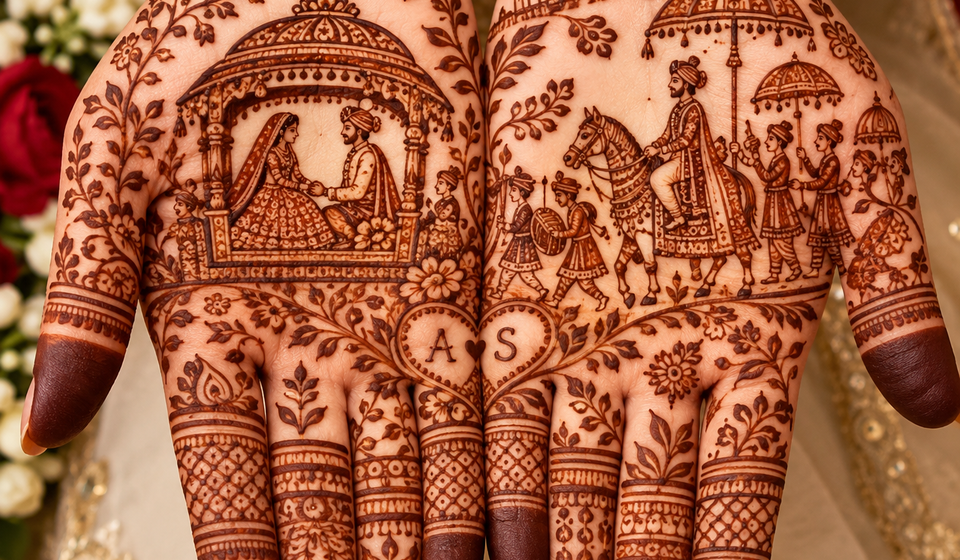

Bridal Mehndi Designs 2026: Latest Styles, Trends & Ideas for Every Bride
Bridal mehndi designs for 2026 blend traditional full-hand artistry with modern negative space, personalized motifs and finer line work. Whether you want intricate Rajasthani jaali, bold Arabic florals or a minimalist look that lets your jewelry shine, the right bridal henna design depends on your outfit, hand shape, wedding timeline, and how much detail you love. This guide covers every major style, what each motif means, how to choose, how long mehndi takes, how to get a dark stain, and how to stay safe with natural henna.
Quick Guide: Which Bridal Mehndi Style Suits You?
| Style | Best for | Detail level | Typical application time |
|---|---|---|---|
| Full-hand bridal mehndi | Traditional weddings, mehndi night | Very high | 4–6 hours per set |
| Arabic bridal mehndi | Bold look, quicker application | Medium | 1–3 hours |
| Rajasthani / Indian jaali | Heavy lehengas, classic brides | Very high | 4–6 hours |
| Pakistani bridal mehndi | Detailed fills with checks and mesh | High | 3–5 hours |
| Minimalist bridal mehndi | Modern brides, small hands | Low | 30–90 minutes |
| Moroccan / geometric | Contemporary and fusion weddings | Medium | 2–3 hours |
| Dulha-dulhan / story mehndi | Personalized, emotional design | High | 4–6 hours |
Times vary by artist, hand size and how much detail is requested.
What Is Trending in Bridal Mehndi Designs for 2026?
Bridal mehndi in 2026 is moving toward designs that feel both rich and balanced. Popular directions include:
- Negative space with detail: Dense jaali and floral work broken up with clean gaps so the pattern breathes.
- Personalized motifs: Initials, wedding dates, a couple’s silhouette, a favorite flower, or a family symbol hidden inside the pattern.
- Finer line work: Thinner, more delicate vines and mesh, applied with fine cones.
- Mixed styles: Arabic bold florals on the front hand paired with Rajasthani detail on the back hand.
- Statement lengths: Elbow-length and full-arm designs for sleeveless or short-sleeve outfits.
- Minimal bridal sets: Cuff, bracelet-style and fingertip designs for brides who prefer a modern look.
Types of Bridal Mehndi Designs
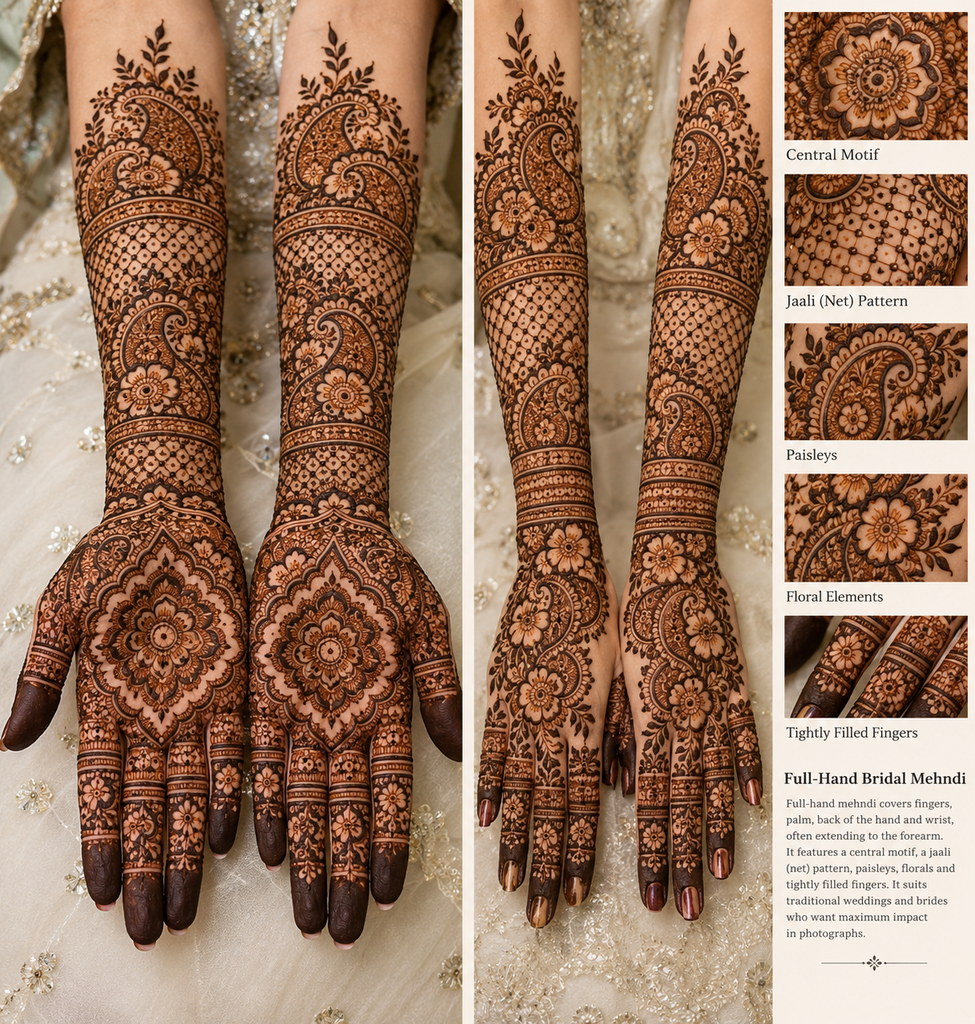
Full-Hand Bridal Mehndi
Full-hand mehndi covers fingers, palm, back of the hand and wrist, often extending to the forearm. It features layered elements: a central motif, a jaali (net) pattern, paisleys, florals and tightly filled fingers. It suits traditional weddings and brides who want maximum impact in photographs.
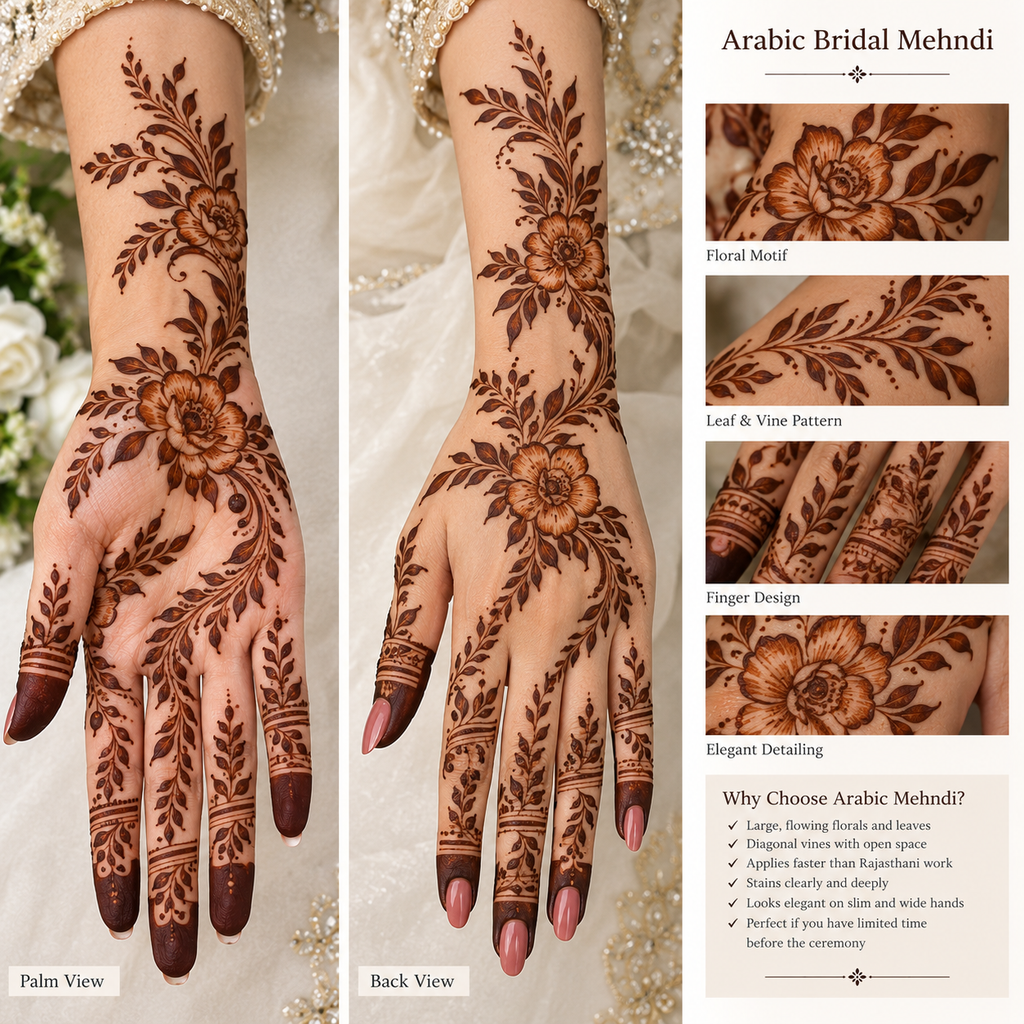
Arabic Bridal Mehndi
Arabic mehndi uses large flowing florals, leaves and diagonal vines with more open space between elements. It applies faster than Rajasthani work, stains clearly and looks elegant on both slim and wide hands. It is a strong choice if you have limited time before the ceremony.
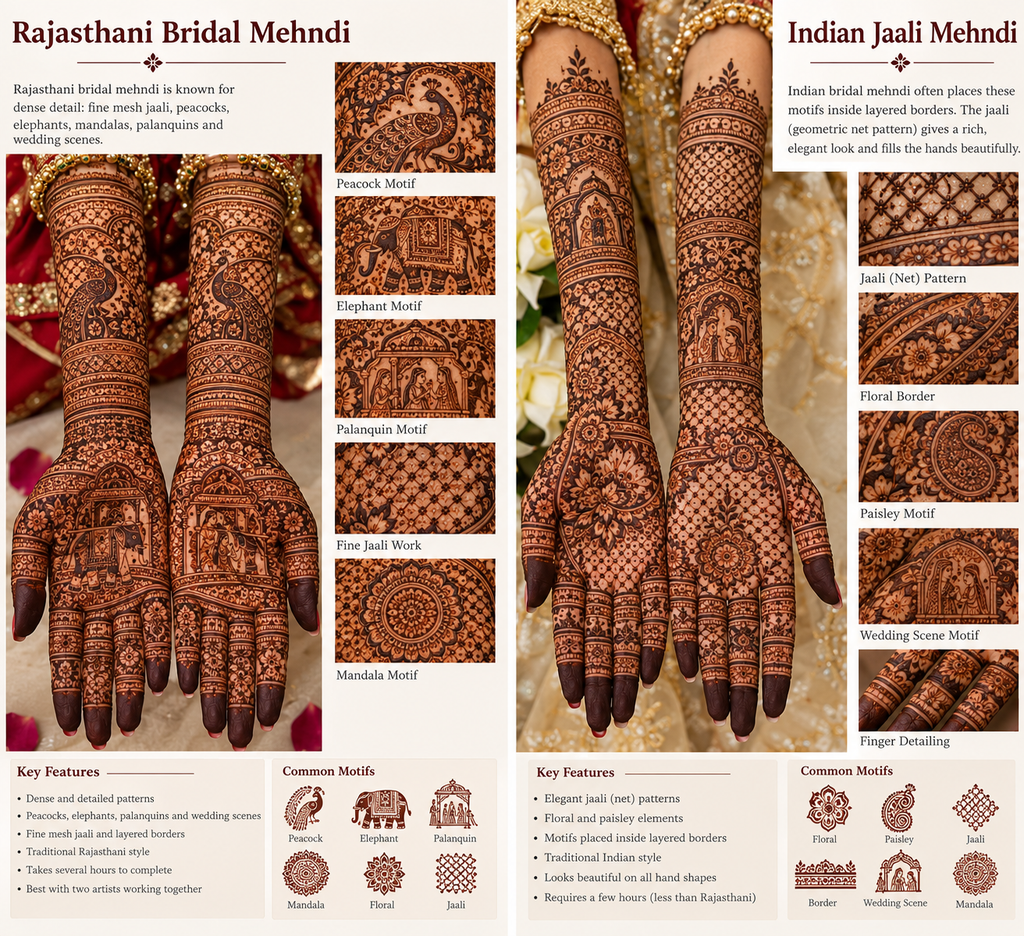
Rajasthani and Indian Jaali Mehndi
Rajasthani bridal mehndi is known for dense detail: fine mesh jaali, peacocks, elephants, mandalas, palanquins and wedding scenes. Indian bridal mehndi often places these motifs inside layered borders. Because it is detailed, plan for several hours and, ideally, two artists working at once.
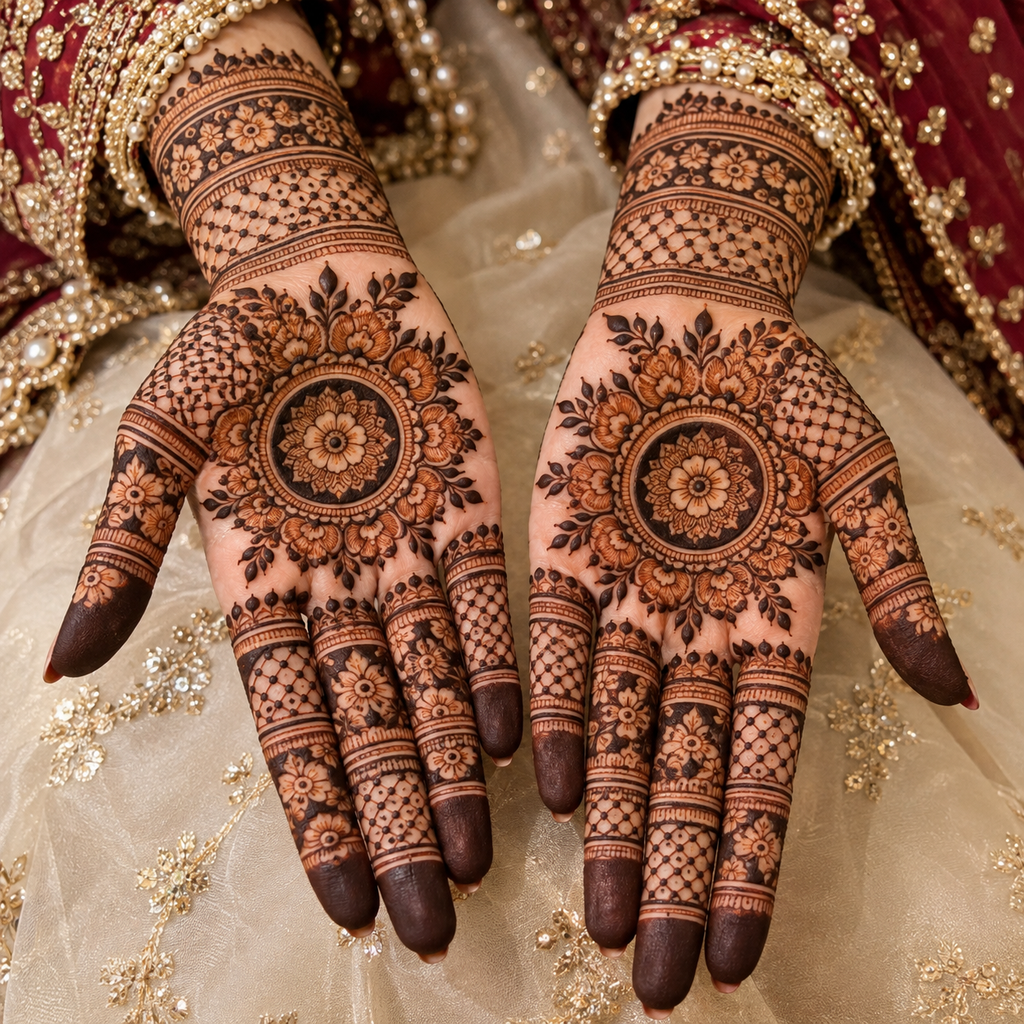
Pakistani Bridal Mehndi
Pakistani bridal designs commonly combine checks, mesh work, floral clusters and a bold central circle or flower on the palm. The look is full and structured, with clear sections that frame the hand.
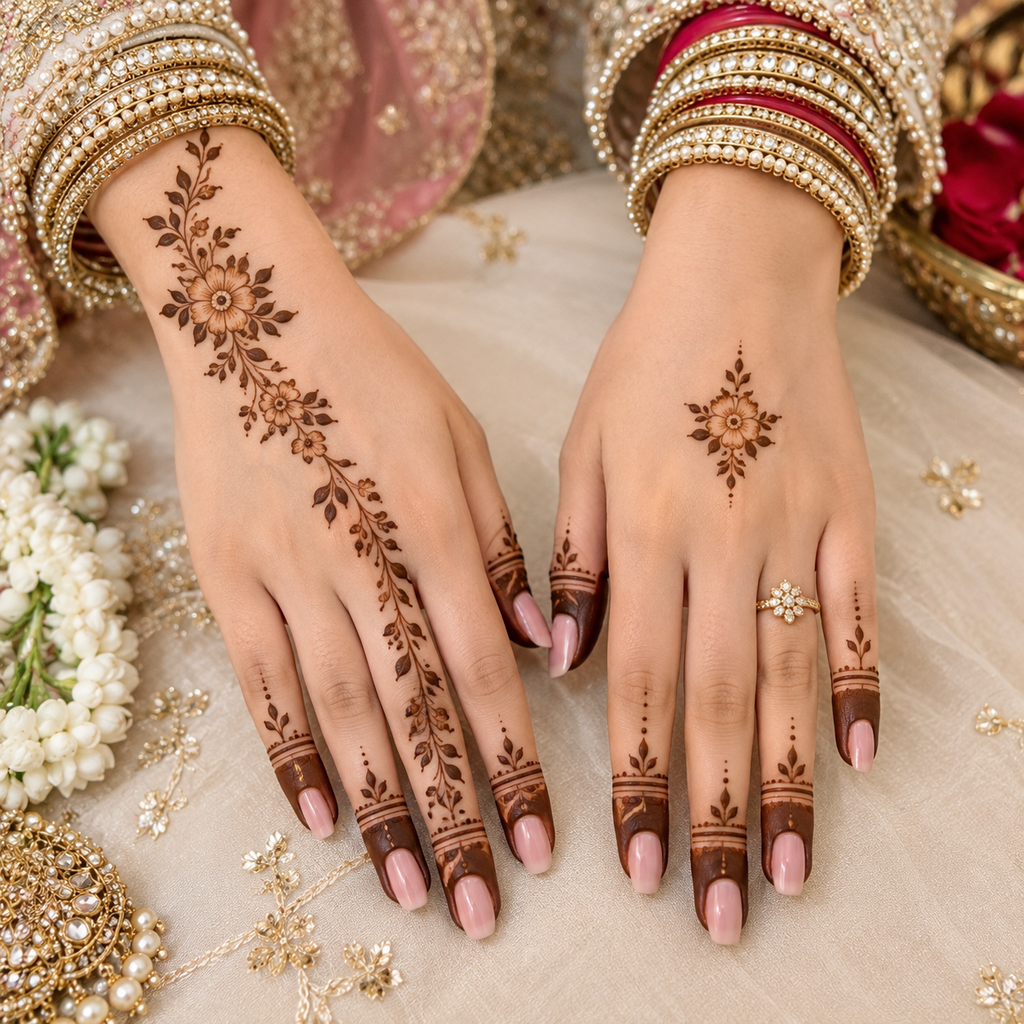
Minimalist Bridal Mehndi
Minimalist bridal mehndi uses a single floral trail, fingertip designs, a cuff or a small palm motif. It suits brides with heavy bangles and jewellery, small hands or a modern wedding style. It is also the most comfortable option if you cannot sit for hours.
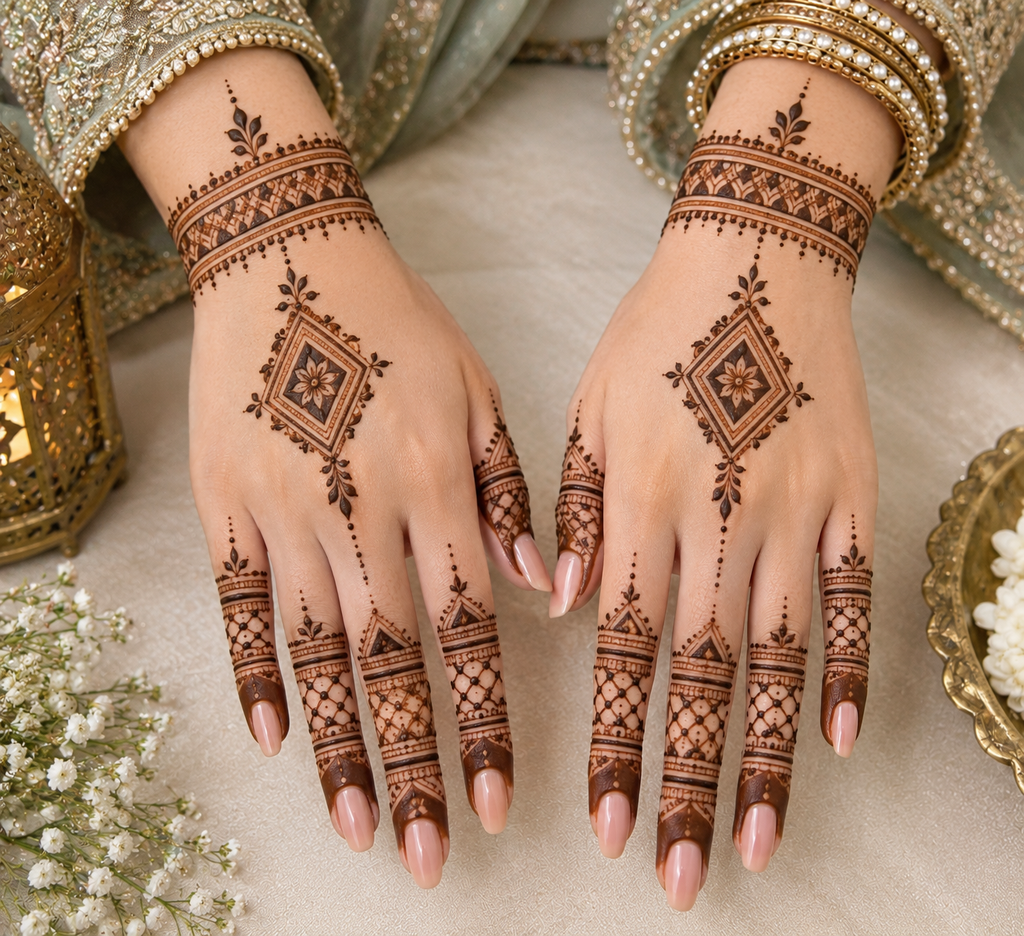
Moroccan and Geometric Mehndi
Moroccan-inspired mehndi uses symmetrical shapes, diamonds, triangles and repeating lines. It looks sharp and contemporary, and pairs well with minimal or fusion bridal outfits.
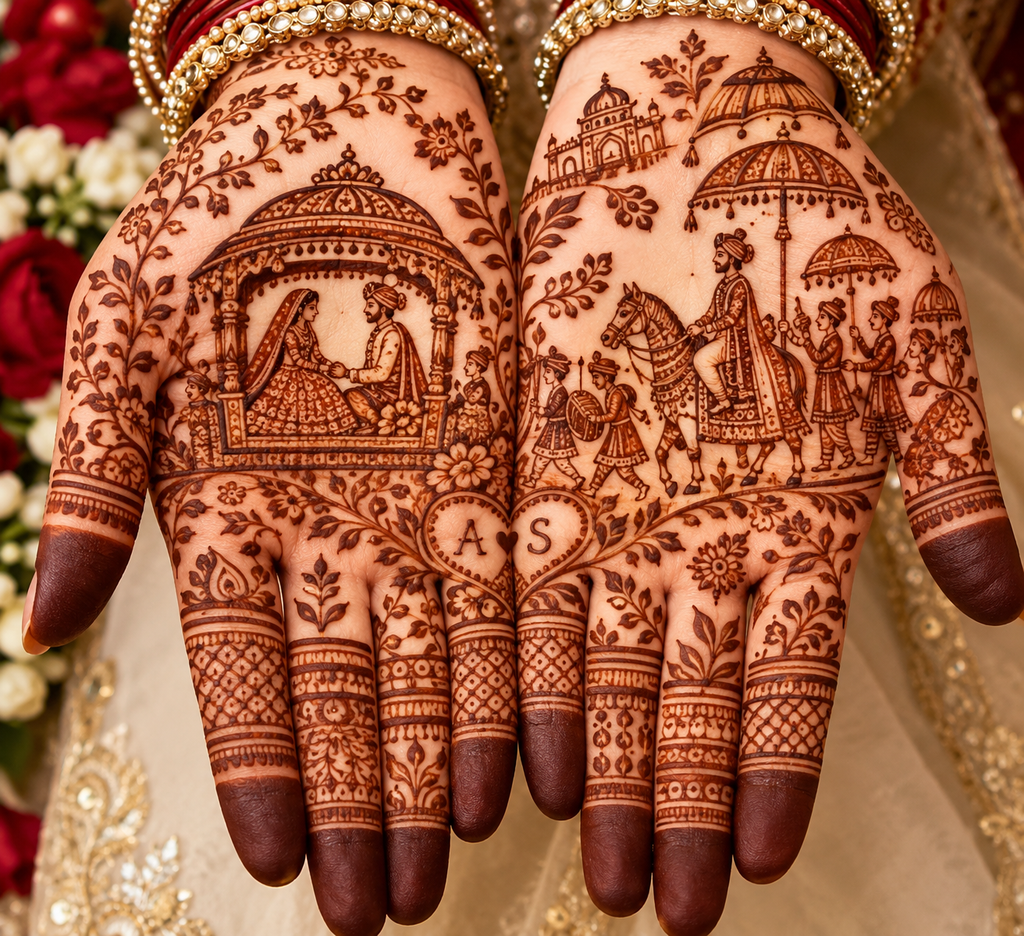
Dulha-Dulhan and Story Mehndi
Story mehndi features the bride and groom in a doli, a baraat scene or a couple’s silhouette, often with wedding date initials hidden in the pattern. It is a favourite for personalized bridal mehndi and a great keepsake.
Back-Hand, Front-Hand and Feet Mehndi
- Back-hand designs frame the area visible in ring and bangle photos. Florals, jaali and mandalas work well here.
- Front-hand (palm) designs carry the main motif and fill the fingers. Palms stain darkest because of thicker skin.
- Feet mehndi is usually applied up to the ankle or shin, often with a lighter design that matches the hand pattern.
Bridal Mehndi Motifs and Their Meanings
| Motif | Common meaning |
|---|---|
| Peacock | Beauty, grace, good fortune |
| Paisley (keri) | Fertility, prosperity |
| Lotus | Purity, new beginnings |
| Mandala | Unity, balance |
| Kalash | Auspiciousness and blessings |
| Doli and shehnai | Wedding procession and celebration |
| Sun | Energy, vitality |
| Vines and leaves | Growth and lasting love |
| Hidden initials | The groom’s name, a game played on the wedding night |
How to Choose the Right Bridal Mehndi Design
- Match your outfit. Sleeveless or short sleeves suit elbow-length designs. Full sleeves allow focus on hands and wrists.
- Consider your jewellery. Heavy bangles, rings and haath phool cover parts of the hand, so keep key motifs visible.
- Think about hand shape. Slim hands suit bold florals. Broader hands suit finer, denser jaali.
- Pick your detail level. Full detail requires patience. Arabic or minimalist designs save time.
- Plan for photos. Save reference photos from several angles and share them with your artist.
- Add a personal touch. Hide initials or a meaningful symbol in the pattern.
When Should You Apply Bridal Mehndi?
Most brides apply mehndi one to two days before the wedding, often at the mehndi ceremony. This gives the stain time to darken without fading before the main event. Allow enough time for application, drying and a gentle first-night routine, and schedule it so you are not rushed.
How to Get a Dark Bridal Mehndi Stain
- Use fresh, natural henna paste made with henna powder, lemon juice, sugar and essential oil.
- Keep the paste on for 6 to 8 hours if possible.
- Dab a lemon and sugar mixture over the dried paste to help it stay moist.
- Keep your hands warm. Heat helps the stain develop.
- Scrape off the paste instead of washing it with water, and avoid water for around 24 hours.
- Apply a light layer of natural oil or balm afterwards.
The stain generally deepens over 24 to 48 hours and fades over one to three weeks, depending on skin type and care.
Natural Henna vs. Black Henna: A Safety Note
Use natural henna only, which gives an orange to deep brown stain. “Black henna” often contains PPD (para-phenylenediamine), a chemical that can cause burns, blisters, scarring and lasting allergic reactions on skin. Ask your artist what is in their paste, avoid products that promise an instant black stain and do a small patch test beforehand if you have sensitive skin.
How to Book a Bridal Mehndi Artist
Book early, especially in wedding season. Before confirming, ask:
- Can I see a portfolio of real bridal work, including close-ups and stains after 24 hours?
- What ingredients are in your henna paste?
- How long will my design take, and will a second artist be involved?
- What is included: hands, feet, guest mehndi, travel?
- Is there a trial design, and what is the cancellation policy?
Price depends on city, artist experience, design complexity, coverage and travel, so request a clear written quote.
Bridal Mehndi Aftercare Tips
- Avoid water and soap for the first 24 hours.
- Apply natural oil to lock in color and keep skin soft.
- Wear gloves or cover hands when cooking or washing.
- Avoid scrubbing, exfoliating or long hot baths in the first week.
- Do not pick at flaking paste; let it fall off naturally.
Frequently Asked Questions About Bridal Mehndi Designs
Which bridal mehndi design is trending in 2026?
Full-hand designs with negative space, mixed Arabic and Rajasthani styles, finer line work and personalized motifs such as initials and couple scenes are leading choices for 2026 brides.
How long does bridal mehndi take to apply?
A detailed full-hand and feet set usually takes about 4 to 6 hours for each part, depending on detail and the number of artists. Simple Arabic or minimalist designs can take under two hours.
When should I apply bridal mehndi before the wedding?
Most brides apply it one to two days before the wedding so the stain has time to deepen and reaches its darkest tone on the wedding day.
How long does bridal mehndi last?
Bridal mehndi generally lasts one to three weeks. It is darkest around 24 to 48 hours after application, then fades gradually.
How can I make my bridal mehndi darker?
Leave the paste on for 6 to 8 hours, apply a lemon and sugar mix, keep your hands warm, avoid water for 24 hours and use a light natural oil afterwards.
Is black henna safe for bridal mehndi?
No. Black henna can contain PPD, which may cause severe skin reactions. Choose natural henna paste that gives a brown or reddish-brown stain.
What are simple bridal mehndi designs?
Simple designs include a floral trail on the back hand, a cuff or bracelet pattern, fingertip designs and a small palm motif. They suit modern brides and heavy jewellery.
Final Thoughts
The best bridal mehndi design for 2026 is the one that matches your outfit, your comfort and your story. Save references, book a trusted artist early, choose natural henna and plan your timing so the stain is rich on the big day.