
Nail biting is a common yet frustrating habit that affects people of all ages. Whether it happens during stress, boredom, or deep concentration, it can feel automatic and difficult to control. Many people try to stop but end up returning to the habit without even realizing it.
The truth is that nail biting is not just a bad habit—it is often tied to emotional triggers and behavioral patterns. The good news is that with the right approach, you can break the habit permanently. This detailed, SEO-optimized guide will walk you through everything you need to know, including why nail biting happens, how to stop it, and how to prevent it from coming back.
What Is Nail Biting and Why Does It Happen?
Nail biting, also known as onychophagia, is a repetitive behavior where a person bites their nails, cuticles, or surrounding skin. It often begins in childhood and may continue into adulthood if not addressed properly.
This habit is usually connected to emotional or psychological triggers rather than just physical urges.
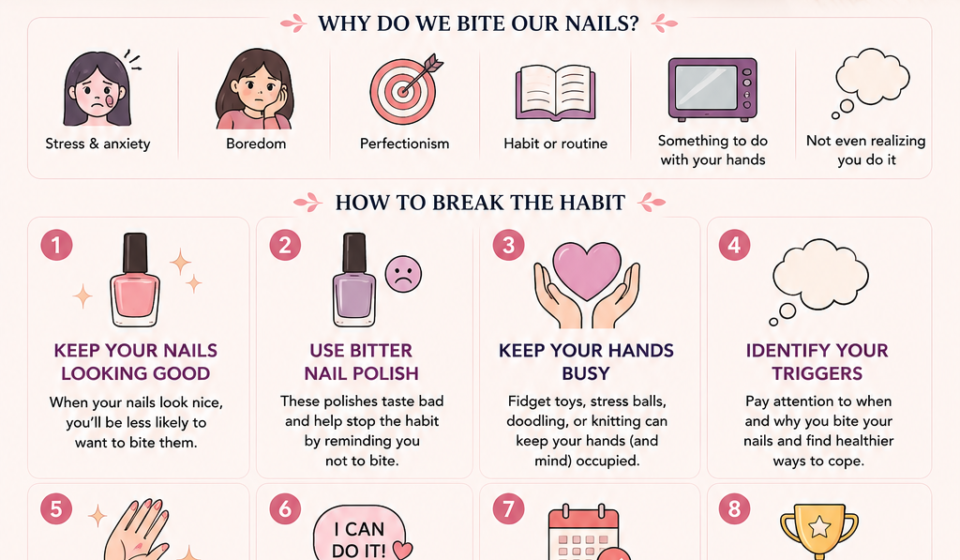
Common Causes of Nail Biting
1. Stress and Anxiety


5
One of the biggest reasons people bite their nails is stress. It acts as a coping mechanism that provides temporary relief but reinforces the behavior over time.
2. Boredom
When your mind is not engaged, your body may look for stimulation. Nail biting becomes an easy, unconscious activity.
3. Habit Loop Formation
Nail biting often becomes automatic through repetition. The brain creates a loop:
Trigger → Action → Relief
Over time, this loop becomes deeply ingrained.
4. Perfectionism
Some individuals bite their nails to “fix” uneven edges or imperfections, which leads to further damage.
5. Emotional Regulation
It may help people deal with emotions like frustration, nervousness, or even excitement.
Why You Should Stop Biting Your Nails
Breaking this habit is not just about appearance—it’s also about health and confidence.
Health Risks
- Increased risk of infections
- Damage to nail beds
- Spread of bacteria into the body
Appearance Concerns
- Short, uneven nails
- Redness and swelling
- Damaged cuticles
Dental Issues
- Teeth damage
- Jaw strain
How Long Does It Take to Break the Habit?
On average, it takes 21 to 66 days to break a habit. However, nail biting may take longer because it is often unconscious. Consistency is key.
Proven Ways to Stop Biting Your Nails
1. Keep Your Nails Short and Clean


5
Short nails reduce the temptation to bite because there is less to pick at.
2. Use Bitter Nail Polish
Special anti-biting nail polishes have a strong, unpleasant taste that discourages biting.
3. Get Regular Manicures


7
When your nails look good, you are less likely to ruin them by biting.
4. Identify Your Triggers
Start paying attention to when you bite your nails:
- While watching TV
- During stressful situations
- When studying
Awareness helps you interrupt the habit.
5. Replace the Habit with Something Else
Instead of biting your nails, try:
- Chewing gum
- Using a stress ball
- Holding a pen or object
This redirects the urge into a healthier action.
6. Keep Your Hands Busy
Activities like drawing, typing, or crafting can reduce idle time and prevent nail biting.
7. Use Gloves or Bandages
Covering your nails creates a physical barrier and reminds you not to bite.
8. Practice Stress Management
Since stress is a major trigger, managing it can reduce nail biting.
Try:
- Deep breathing
- Meditation
- Exercise
9. Set Small Goals
Instead of quitting all at once, aim for gradual improvement:
- One day without biting
- Then one week
Celebrate progress to stay motivated.
10. Track Your Progress
Keeping a journal or using an app can help you stay accountable.
Psychological Techniques to Break Nail Biting
Habit Reversal Training (HRT)
This technique involves:
- Awareness of the habit
- Replacing it with another action
- Reinforcing the new behavior
Mindfulness
Being present helps you notice when you are about to bite your nails and stop yourself.
Positive Reinforcement
Reward yourself for not biting your nails. This strengthens new habits.
Natural Remedies to Stop Nail Biting
Apply Natural Oils
Oils like coconut or olive oil can improve nail health and make them less tempting to bite.
Use Aloe Vera
Its bitter taste discourages biting while soothing the skin.
Maintain Nail Hygiene
Clean nails are less likely to attract biting behavior.
Common Mistakes to Avoid
Expecting Instant Results
Breaking a habit takes time and patience.
Ignoring Triggers
Without understanding why you bite your nails, it is harder to stop.
Being Too Hard on Yourself
Slip-ups happen. Focus on progress, not perfection.
How to Help Children Stop Nail Biting
For children, nail biting is often linked to anxiety or boredom.
Tips for parents:
- Avoid punishment
- Encourage positive habits
- Provide distractions
- Praise progress
When to Seek Professional Help
If nail biting becomes severe, causing pain or infection, consider consulting a professional.
Daily Routine to Stop Nail Biting
Morning
- Apply nail treatment
- Set intention for the day
Afternoon
- Stay busy
- Use stress-relief techniques
Night
- Reflect on progress
- Moisturize nails
Long-Term Benefits of Quitting Nail Biting
- Healthier nails
- Better appearance
- Increased confidence
- Reduced risk of infections
How to Stay Consistent
Consistency is the key to breaking any habit. Remind yourself why you want to stop and keep practicing new behaviors.
FAQs About Nail Biting
Is nail biting a serious problem?
It can be if it leads to infections or emotional distress.
Can adults stop nail biting?
Yes, with the right techniques and consistency.
Does stress always cause nail biting?
Not always, but it is a major factor.
Final Thoughts
Breaking the habit of biting your nails may seem difficult, but it is completely achievable with the right approach. By understanding your triggers, replacing the habit with healthier alternatives, and staying consistent, you can successfully stop nail biting for good.
Remember, progress takes time. Even small improvements matter. Stay patient, stay committed, and you will see lasting results.