
Gel nail polish is one of the best things to happen to manicures — glossy, long-lasting, and chip-resistant for weeks. But when it comes time to take it off, that same durability becomes your biggest challenge. Unlike regular nail polish, which you can swipe off in seconds with a cotton ball, gel polish bonds chemically to your nail plate. It needs the right removal technique, or you risk taking layers of your natural nail along with it.
The good news? You don’t have to book a salon appointment every time your gel needs to go. With the right supplies and a little patience, you can remove gel nail polish safely at home — and keep your natural nails healthy in the process.
In this complete guide, we’ll walk you through every method available for getting gel nail polish off, from the gold-standard acetone foil technique to acetone-free alternatives, along with expert aftercare tips to restore your nails once the polish is gone.
Why You Can’t Just Peel Gel Polish Off
Before we get into removal methods, it’s worth understanding why peeling and picking are such bad ideas — even when the gel is lifting at the edges and it’s tempting to just pull it off.
Gel polish doesn’t sit on top of your nail the way regular polish does. It bonds to the upper layers of your nail plate through a chemical process activated by UV or LED light. When you peel it off, you’re not just removing the polish — you’re ripping away the top layers of your nail too. One peeling session can remove weeks’ worth of nail surface growth, leaving your nails thin, weak, and prone to splitting.
The damage compounds over time. Repeated peeling can take three to six months to fully recover from, leaving you with nails that are soft, ridged, and fragile. The right removal method dissolves the gel chemically rather than tearing it away, preserving your natural nail underneath.
What You’ll Need Before You Start
Regardless of which removal method you choose, having all your supplies ready before you begin is essential. Running to find something mid-removal means your wraps slip off, the acetone evaporates, and you have to start over.
For the acetone method (foil or wrap):
- 100% pure acetone (not acetone-based nail polish remover — you want pure)
- Cotton balls or cotton pads
- Aluminum foil or plastic food wrap, cut into squares large enough to wrap each finger
- A coarse-grit nail file (180 grit works well)
- A wooden or rubber-tipped cuticle pusher (orange stick)
- Petroleum jelly or cuticle oil
- A soft washcloth or paper towels
- A timer
For acetone-free methods:
- Specialized gel nail remover products (acetone-free formulas)
- A medium-grit nail buffer and fine-grit nail file
- Cuticle oil and rich hand cream
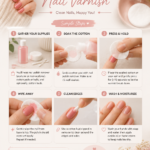
Method 1: The Acetone Foil Method (Most Effective)
This is the gold standard for gel removal — the same method professional nail salons use, adapted for home use. According to board-certified dermatologist Dr. Shari Lipner of the American Academy of Dermatology, acetone is the most effective way to remove gel nail polish at home, and this technique minimizes the damage to your surrounding skin.
Step 1: Prep Your Workspace
Acetone is a powerful solvent that can damage sinks, countertops, and furniture. Line your work surface with plastic wrap and place a thick towel on top. Work in a well-ventilated area — open a window or turn on a fan, as acetone fumes are strong.
Step 2: Protect Your Skin
Apply a thin layer of petroleum jelly to each cuticle and the skin surrounding your nails. This creates a protective barrier that prevents the acetone from drying out and irritating the skin around your nails. Be careful not to get petroleum jelly on the nail surface itself, as it can prevent the acetone from penetrating the gel.
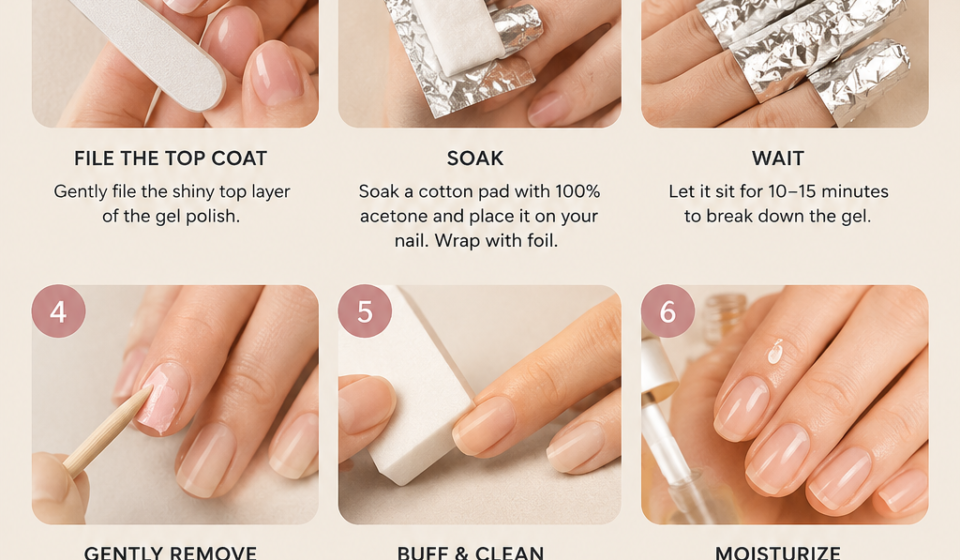
Step 3: File Off the Shiny Top Layer
Using your coarse-grit nail file, gently file the surface of each nail to break the shine and remove the top coat layer. You’re not trying to file off the entire gel at this point — just rough up the surface enough to allow the acetone to penetrate. File in one direction and use light pressure. You’ll know you’ve done enough when the glossy finish is gone and the nail looks dull and matte.
This step is especially important for thicker gel applications, builder gels, or BIAB (Builder in a Bottle) products, where the gel layer is significantly thicker than standard gel polish.
Step 4: Soak the Cotton and Wrap Each Nail
Cut your cotton balls or pads into pieces roughly the size of each nail. Saturate each piece thoroughly with pure acetone — it should be soaked but not dripping. Press one soaked cotton piece onto each nail, making sure it covers the entire nail surface.
Wrap each finger in a square of aluminum foil or plastic food wrap. The goal is to create a snug seal that keeps the acetone in contact with the gel. Dermatologists actually recommend plastic food wrap over foil — plastic creates a tighter seal so the acetone is less likely to drip and stays in contact with the polish more effectively. The wrap should be firm but not so tight that it cuts off circulation.
Step 5: Wait 10 to 15 Minutes
Set a timer. This is the step most people rush — and the most common mistake in home gel removal is not soaking long enough. Pure acetone typically needs 10 to 15 minutes to fully break down a standard gel polish application. Specialized gel remover products may work faster, sometimes in as little as 3 to 5 minutes — check the product instructions.
Resist the urge to peek too early. If the wraps slip off and the acetone evaporates, you’ll need to start the process again.
Step 6: Gently Push Off the Gel
Remove one wrap at a time. Using your wooden cuticle pusher, gently nudge the softened gel from the cuticle toward the tip of the nail. It should slide off with minimal pressure, coming away in sheets. If it doesn’t come off easily, the gel needs more soaking time — rewrap and wait another 5 minutes rather than forcing it off. Scraping hard is how nail damage happens.
Work through all ten nails, rewrapping any that need more time.
Step 7: Remove Any Remaining Residue
Once the bulk of the gel is removed, use a warm, damp washcloth to gently rub away any remaining residue from the nail surface. Take care to rub only the nail itself, not the surrounding skin. A gentle buff with a fine-grit buffer can smooth out any uneven texture left behind — but keep it light. Over-buffing is one of the fastest ways to thin out your nail plate.
Step 8: Wash, Moisturize, and Recover
Wash your hands thoroughly with a gentle, fragrance-free soap to remove all traces of acetone. Then immediately apply cuticle oil and a rich hand cream to your nails and surrounding skin. Your nails have just been through a chemical process and need immediate hydration. Continue applying cuticle oil at least three times a day for the following week to support recovery.
Method 2: The Acetone Soak Bowl Method (Fastest)
If you prefer not to deal with wrapping each individual finger, a two-tiered soak bowl is an efficient alternative — and potentially the fastest method available for home removal.
These specialized bowls have two tiers: the bottom holds hot water, and the top tier holds acetone compartments for each fingertip. The hot water gently warms the acetone in the upper bowl, and warmed acetone removes gel significantly faster than room-temperature acetone.
How to Do It:
- File off the shiny top coat layer on each nail, just as in the foil method.
- Apply petroleum jelly around your cuticles and skin.
- Boil a small amount of water and allow it to cool slightly so it’s hot but not scalding. Pour it into the bottom tier of the soak bowl.
- Fill the top tier finger compartments about three-quarters full with pure acetone.
- Place your fingertips in the acetone, ensuring each nail is submerged. Rest your palm on the center palm rest.
- Soak for 10 to 15 minutes (or less, if using a specialized gel remover).
- Use a cuticle pusher to gently remove the softened gel.
- Moisturize thoroughly.
The downside of the bowl method is that your fingertips are more exposed to acetone than with the foil method, which can increase dryness. This is why protecting the surrounding skin with petroleum jelly beforehand is especially important here.
Method 3: Acetone-Free Gel Remover Products
If you prefer to avoid pure acetone, specialized gel remover products formulated without acetone are increasingly available. These typically use gentler alternative solvents combined with conditioning and moisturizing agents that are kinder to your nails and cuticles.
The tradeoff is time — acetone-free removers generally take longer to break down the gel polymer, and they may not work as effectively on thicker gel formulations or hard gels. However, for standard soft gel polish, they’re a solid option.
How to Use Acetone-Free Gel Removers:
- File the top coat to break the shine.
- Soak cotton pads in the acetone-free remover.
- Place pads on each nail and secure with removal clips or foil.
- Wait for the time specified on the product — typically 15 to 20 minutes.
- Gently push off the softened gel with a cuticle stick.
- Apply cuticle oil and hand cream.
Reusable removal clips are a worthwhile investment if you use this method regularly — they hold the soaked cotton securely in place without the faff of foil, and they’re much less messy.
Method 4: The Filing Method (No Liquids Required)
For those who want to avoid all solvents entirely, or who have especially sensitive skin, the filing method removes gel polish purely through physical buffing. This requires patience and a very light touch — filing too aggressively is what causes nail damage, not the method itself when done correctly.
How to Do It:
- Use a medium-grit nail buffer to gently file the surface of the gel, working in different directions across the entire nail surface.
- File slowly and carefully, checking the nail frequently. The gel will start to disappear and you’ll begin to see the natural nail surface beneath.
- Once you can see the natural nail and only a thin residue remains, switch to a fine-grit file or buffer to remove the last traces.
- Stop as soon as you see the natural nail — continuing to file will damage the nail plate itself.
- Wipe away the dust with a cotton ball.
- Apply cuticle oil and hand cream immediately.
Important warning: Over-buffing is one of the most common causes of paper-thin, fragile nails. If the surface starts to look uneven or you can feel heat or sensitivity, stop immediately and let the nail recover. A thin layer of remaining gel is safer than a thinned nail plate — it can grow out naturally over time.
Method 5: Letting Your Nails Grow Out
It might sound counterintuitive, but according to Dr. Lipner of the American Academy of Dermatology, the single most nail-friendly way to remove gel polish is simply to let your nails grow out naturally. Clipping them weekly removes the gel gradually and prevents the gel from catching on clothing or other objects.
The obvious downside is time: fingernails take approximately six months to fully grow out, and toenails can take 12 to 18 months. This approach requires resisting any urge to pick at lifting gel edges throughout that period — picking causes the same damage as forcibly peeling.
This method works best if your gel has already started lifting significantly or your nails are particularly damaged and need a chemical-free recovery period.
Hard Gel vs. Soft Gel: Does Removal Method Change?
Yes — and this distinction matters.
Soft gel polish (the most common type used in standard gel manicures) can be dissolved with acetone using any of the methods above.
Hard gel (a thicker, stronger product often used for extensions) cannot be dissolved by acetone. It can only be removed by filing, and this is a job best left to a professional nail technician with an electric file. Attempting to file off hard gel at home without proper equipment and training is a reliable way to seriously damage your nails.
Builder gel and BIAB (Builder in a Bottle) products are thicker than standard gel polish and require significantly more filing before an acetone soak to be effective. Don’t skip the filing step if you’re wearing these products.
Common Mistakes to Avoid
Even with the right technique, these errors can derail your removal and damage your nails:
- Peeling or picking at the gel, even when it’s already lifting at the edges
- Not soaking long enough — rushing removal is the most common mistake; if the gel doesn’t come off easily, it needs more time
- Skipping the top coat filing step — without roughing up the surface, acetone can’t penetrate the sealed top layer
- Using acetone-based remover instead of pure acetone — regular nail polish remover contains only a small percentage of acetone and won’t effectively remove gel
- Scraping hard when the gel doesn’t lift easily — this tears the nail surface
- Over-buffing in the filing method — less is always more; stop the moment you see natural nail
- Skipping aftercare — acetone is drying and your nails need immediate hydration after removal
Nail Aftercare: How to Restore Your Nails After Gel Removal
Proper aftercare is just as important as the removal process itself. After removing gel polish, your nails will often feel softer and more fragile — this is normal and temporary.
Apply cuticle oil immediately and daily. Daily cuticle oil is the single most important step in nail recovery. It nourishes the nail matrix, encourages healthy regrowth, and keeps the nail plate flexible so it’s less prone to splitting.
Moisturize generously. After washing off the acetone, apply a rich hand cream to your hands, paying special attention to the nails and cuticles. Repeat this several times throughout the day, especially after washing your hands.
Give your nails 24 hours to firm up. After gel removal, nails are temporarily in a softer state. Give them at least 24 hours before applying a new gel or acrylic product.
Use a nail strengthener. A nail hardener or strengthening treatment helps your nails regain resilience faster. Apply it for the first week after removal in place of colored polish if your nails feel particularly thin or weak.
Take a break if needed. If your nails are significantly damaged, giving them a week or two completely free of any product — just cuticle oil and moisturizer — will accelerate their recovery considerably.
Apply petroleum jelly around your cuticles for one week after acetone removal. Board-certified dermatologists recommend this to reduce any lingering irritation from the acetone.
Quick Comparison: Gel Removal Methods at a Glance
| Method | Effectiveness | Time Required | Best For |
|---|---|---|---|
| Acetone Foil/Wrap | ⭐⭐⭐⭐⭐ Excellent | 15–25 minutes | Standard gel polish |
| Acetone Soak Bowl | ⭐⭐⭐⭐⭐ Excellent | 10–20 minutes | Speed; standard gel polish |
| Acetone-Free Remover | ⭐⭐⭐⭐ Good | 20–30 minutes | Sensitive skin or nails |
| Filing Method | ⭐⭐⭐ Moderate | 30–45 minutes | Those avoiding all chemicals |
| Growing Out | ⭐⭐⭐⭐⭐ Safest | 6–18 months | Damaged nails needing recovery |
| Salon Removal | ⭐⭐⭐⭐⭐ Best | 30–60 minutes | Hard gel; professional results |
Final Thoughts: Safe Gel Removal Is All About Patience
Getting gel nail polish off at home is completely achievable — but it requires the right supplies, enough time, and a gentle hand. The most important rules are simple:
- Never peel or scrape gel off forcibly — always dissolve it first
- Use pure acetone for the most effective and quickest results
- Soak long enough — if it’s not coming off easily, it needs more time, not more force
- Moisturize immediately and daily after removal to support nail recovery
Whether you go with the classic acetone foil method, a soak bowl, an acetone-free remover, or pure filing, the goal is always the same: dissolve the bond, not destroy your nail. Take your time, be gentle, follow up with cuticle oil, and your natural nails will stay healthy and strong through every gel manicure cycle.