
Few beauty routines are as universally familiar as painting your nails — but when it’s time for a change, removing that polish cleanly and without damaging your nails is a skill worth mastering. Whether you’re dealing with a classic creme polish, a stubborn glitter formula, a long-wear gel, or you simply don’t have nail polish remover on hand, there is a method that works for every situation.
This comprehensive guide covers everything you need to know about how to remove nail polish at home — from the most effective traditional techniques to clever alternatives, tips for sensitive nails, and expert aftercare advice to keep your nails healthy and strong through every color change.
Understanding Nail Polish: Why Removal Matters
Nail polish is made from a combination of film-forming polymers, solvents, plasticizers, and pigments. When applied, the solvents evaporate and leave behind a hard, colored film that adheres tightly to the nail surface. The longer polish sits on the nail, the more it can dry out the nail plate and, if left too long, begin to stain it.
Improper removal — scraping, peeling, or using the wrong products — strips away layers of the natural nail, leaving it thin, brittle, and prone to breakage. Knowing the right technique not only gets your nails clean but also protects them for the next application.
Types of Nail Polish and What They Require
Not all nail polish is the same, and the right removal method depends on the formula you’re working with.
Regular nail polish — the most common type — dissolves readily with standard acetone or non-acetone removers. It is the easiest to remove and rarely requires more than a few seconds of contact with remover.
Glitter nail polish contains dense pigment particles that don’t dissolve as easily as regular polish. It requires longer soak times and a slightly different technique to remove cleanly without excessive rubbing.
Long-wear or chip-resistant polish (such as Essie Gel Couture or OPI Infinite Shine) is formulated to last longer than standard polish. It may require a slightly stronger remover or a longer dwell time on the nail.
Gel nail polish is cured under UV or LED light and bonds chemically to the nail surface. It cannot be removed with regular remover and requires 100% pure acetone and a specific soaking technique. For a detailed gel-specific guide, refer to our dedicated gel nail removal article.
What You’ll Need to Remove Nail Polish
Before you begin, gather your supplies. Having everything within reach makes the process quicker and less messy.
For standard removal:
- Nail polish remover (acetone-based or non-acetone)
- Cotton balls, cotton pads, or nail polish remover pads
- A nail file or buffer (optional, for smoothing afterward)
- Cuticle oil or hand moisturizer
For glitter polish:
- 100% acetone
- Aluminum foil or soaking clips
- Cotton balls
- Cuticle oil
For sensitive or dry nails:
- Non-acetone remover or acetone-free formula
- Vitamin E oil or cuticle oil for aftercare
Method 1: Using Acetone Nail Polish Remover (Fastest and Most Effective)
Acetone is the most powerful and widely used nail polish remover. It works by dissolving the polymer film of the nail polish almost on contact, making it the fastest option for most polish types.
Step 1: Work in a Ventilated Area
Acetone has a strong smell and produces fumes that can be irritating in an enclosed space. Open a window or work near a fan before you begin. Keep acetone away from open flames, as it is highly flammable.
Step 2: Protect the Skin Around Your Nails (Optional)
If you have particularly sensitive skin or dry cuticles, apply a thin layer of petroleum jelly or cuticle oil around — but not on — each nail. This creates a light barrier against the drying effects of acetone.
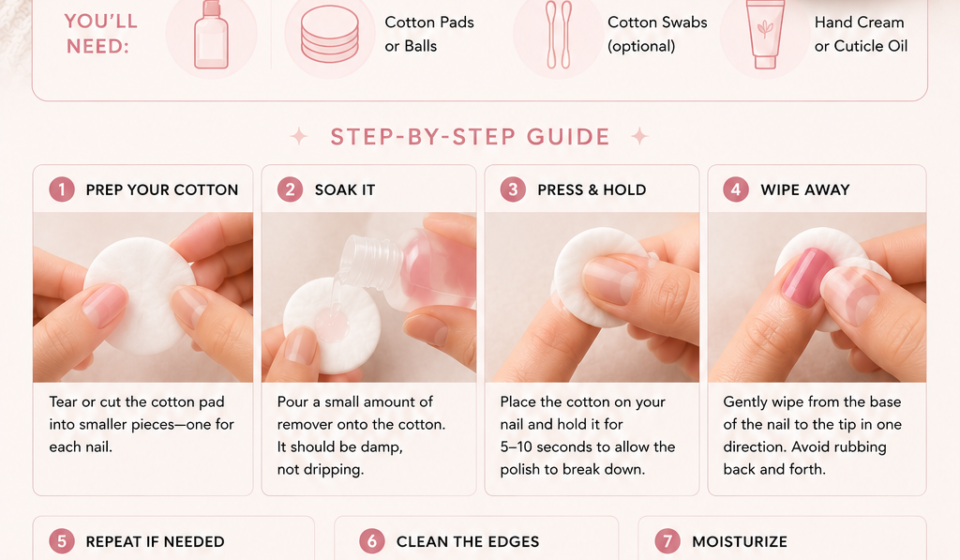
Step 3: Saturate a Cotton Ball
Pour a small amount of acetone nail polish remover onto a cotton ball or pad. It should be fully saturated but not dripping.
Step 4: Press and Hold, Then Wipe
Press the saturated cotton firmly against the nail and hold it in place for five to ten seconds. This gives the acetone time to dissolve the polish before you begin wiping. Then, using gentle but firm pressure, wipe the cotton from the base of the nail toward the tip in one smooth stroke.
For most regular polishes, one or two passes is all you need. Avoid vigorous scrubbing back and forth, which is unnecessary with acetone and harder on the skin around the nail.
Step 5: Repeat for Each Nail
Use a fresh section of cotton for each nail, or a fresh cotton ball entirely, to avoid spreading dissolved polish from one nail to another.
Step 6: Clean Up Edges
Use a cotton swab dipped in remover to clean up any polish left along the cuticle line or skin around the nail.
Step 7: Wash and Moisturize
Rinse your hands thoroughly with soap and water to remove all acetone residue. Immediately apply a generous layer of cuticle oil and hand cream. Acetone removes moisture from both nails and skin, and replenishing it right away prevents dryness and brittleness.
Method 2: Using Non-Acetone Nail Polish Remover (Gentler Option)
Non-acetone removers use milder solvents such as ethyl acetate, isopropyl alcohol, or propylene carbonate to dissolve nail polish. They are significantly less drying than acetone and are a better choice for people with dry, brittle, or sensitive nails — as well as for those wearing acrylic or gel extensions, since acetone can damage or dissolve certain nail enhancements.
How Non-Acetone Remover Differs:
The technique is essentially the same as with acetone remover, but the process takes longer. Non-acetone removers are not as strong, so you will need to:
- Hold the cotton in contact with the nail for 15 to 20 seconds before wiping
- Use more product per nail
- Make two to three passes per nail to fully remove the polish
- Be patient with darker shades, which may require a brief second application
Non-acetone removers are an excellent everyday option for those who change their nail polish frequently and want to minimize cumulative nail damage over time.
Method 3: The Foil Soak Method (Best for Glitter and Stubborn Polish)
Glitter nail polish is notoriously difficult to remove because the glitter particles themselves don’t dissolve in remover — only the base they’re suspended in does. This means regular wiping simply smears the glitter around rather than removing it. The foil soak method solves this by allowing the remover to penetrate fully and lift the glitter with the polish in one go.
Step 1: Saturate the Cotton
Cut or tear cotton balls into pieces roughly the size of each nail. Saturate each piece generously with 100% acetone.
Step 2: Place and Wrap
Press a saturated cotton piece firmly against each nail and wrap a small square of aluminum foil around the fingertip to hold it in place. The foil traps heat and keeps the acetone in direct contact with the nail.
Step 3: Wait 10 Minutes
Leave the wraps on for a full 10 minutes. Do not remove them early. The acetone needs time to penetrate the glitter formula fully.
Step 4: Twist and Pull Off
When you remove each foil, twist it slightly as you pull it away. This motion lifts the dissolved polish off the nail along with the foil. The majority of the glitter polish should come away with the cotton in one clean motion.
Step 5: Clean Up and Moisturize
Use a cotton swab dipped in remover to clean up any remaining glitter near the edges. Wash hands and moisturize thoroughly.
Method 4: Rubbing Alcohol or Hand Sanitizer
If you’ve run out of nail polish remover, rubbing alcohol (isopropyl alcohol at 70% or higher) or alcohol-based hand sanitizer can work in a pinch for light, sheer, or older polishes that have begun to chip.
How to Use:
Saturate a cotton ball with rubbing alcohol or apply a generous amount of hand sanitizer directly to a cotton pad. Press it against the nail and rub in circular motions. This method takes considerably more effort than proper remover and works best on:
- Thin, sheer nail polishes
- Polish that has already started to chip or peel
- Light nude or pastel shades
It will not work well on dark, opaque, or glitter polishes. Think of it as a useful emergency solution rather than a regular removal method.
Method 5: Toothpaste
Toothpaste — particularly whitening formulas — contains mild abrasives that can physically scrub away nail polish in the absence of chemical removers. While slower and less effective than proper remover, it’s a genuinely functional option when you’re traveling or caught without supplies.
How to Use:
Apply a small amount of whitening toothpaste to an old toothbrush or a cotton pad. Scrub the nail in small circular motions for 30 to 60 seconds. Rinse and repeat as needed. This method works best on thin polishes and lighter shades. For dark or glitter polish, expect limited results.
Method 6: Hairspray
Alcohol-based hairspray can break down nail polish similarly to rubbing alcohol. Spray it directly onto the nail and wipe quickly with a cotton pad before it dries. The window of effectiveness is short, so work one nail at a time and act fast. This is strictly a last-resort method but can be surprisingly effective on thin or faded polish.
Method 7: Warm Soapy Water and a Nail Buffer
For those who prefer to avoid all chemical solvents, warm soapy water combined with a gentle nail buffer can gradually soften and remove thin layers of older, chipping polish.
How to Use:
Soak your fingertips in warm soapy water for 10 to 15 minutes to soften the polish. Once softened, gently buff the nail surface with a soft nail buffer using light circular strokes. This will gradually lift the polish without any chemicals. It requires patience and works best on thin, single-coat applications of older polish that has already started to lift at the edges.
This method is ideal for pregnant women who prefer to minimize chemical exposure, or for those with extreme chemical sensitivities.
How to Remove Nail Polish Without Cotton Balls
If you don’t have cotton balls or pads available, there are several alternatives that hold remover effectively:
- Paper towels — fold into a small square for firmness; work well but are rougher on skin
- Tissue paper — gentler but less durable; works for light polishes
- Old cloth or felt — a small piece of fabric can substitute in a pinch
- Pre-soaked remover pads — individually packaged wipes available at pharmacies; convenient for travel
Removing Nail Polish from Skin and Cuticles
It’s common for nail polish to end up on the skin around the nail — especially when painting your non-dominant hand. Removing it is simple:
- Dip a cotton swab in nail polish remover
- Run it along the cuticle line and around the nail edges
- The polish lifts cleanly in one pass
- For dried polish on fingers or knuckles, a brief soak with a remover-saturated cotton ball followed by gentle rubbing does the job
Removing Nail Polish from Surfaces and Fabric
Accidents happen. If nail polish lands on an unintended surface, here’s how to deal with it:
Hard surfaces (countertops, floors, glass): Act quickly before the polish dries. Acetone on a cotton ball removes most polish cleanly from non-porous surfaces. Always test in an inconspicuous area first, as acetone can damage certain finishes.
Fabric and carpet: Blot — do not rub — fresh polish immediately with a clean cloth. Once blotted, apply a small amount of non-acetone remover with a cotton swab and continue blotting. Rubbing spreads the stain further.
Wood: Avoid acetone on finished wood, as it can strip the finish. Instead, use a tiny amount of rubbing alcohol on a cotton swab and work carefully.
Tips for Removing Nail Polish Without Damaging Your Nails
Nail health is easy to overlook during polish removal, but a few mindful habits make a significant difference over time.
Never peel or pick your polish off. Peeling polish — even when it’s already chipping — pulls away the top layers of the nail plate with it. Over time, this causes permanent thinning and surface damage.
Use the press-and-hold technique. Holding the remover against the nail for several seconds before wiping reduces the need for hard scrubbing, which is abrasive on both the nail and the surrounding skin.
Don’t remove polish too frequently. Even the gentlest remover is somewhat drying. If you change polish weekly, consider giving your nails a bare, polish-free week every month to recover.
Follow up with oil every single time. Cuticle oil applied immediately after removal replaces lost moisture before dryness sets in. This one habit alone significantly reduces the cumulative drying effect of regular polish removal.
Use the right remover for your nail type. If your nails are already thin, dry, or damaged, non-acetone remover is the kinder choice even if it takes a little longer.
How to Care for Your Nails After Removing Polish
Aftercare is the step most people skip — and the one that makes the biggest difference in long-term nail health.
Apply cuticle oil immediately. Massage it into each nail bed and the surrounding skin. Jojoba oil, vitamin E oil, and sweet almond oil are all excellent choices.
Moisturize your hands. Acetone in particular strips moisture from skin as well as nails. A thick hand cream applied right after removal keeps skin soft and prevents the uncomfortable dry, tight feeling that follows.
Let nails breathe. If you plan to repaint, give your nails at least 10 to 15 minutes of air time before applying new polish. This allows any remaining solvent to evaporate fully and helps the new base coat adhere better.
Use a nail strengthener. If your nails feel weak or thin after removal, apply a clear nail hardener or strengthening base coat. These products contain keratin or calcium-based ingredients that temporarily reinforce the nail plate.
Stay hydrated. Nail health starts from within. Drinking adequate water and eating a diet rich in biotin, protein, and essential fatty acids supports stronger, more flexible nails that are less prone to breaking or peeling.
Frequently Asked Questions
How long does it take to remove nail polish? With acetone remover, most regular polishes take one to three minutes per hand. Non-acetone removers take slightly longer. Glitter or dark polishes using the foil method take around 10 to 15 minutes total.
Is acetone bad for your nails? Acetone is drying but does not cause permanent damage when used correctly. The key is to moisturize thoroughly after every use. It is only problematic when used excessively without any aftercare.
Can I use nail polish remover every day? Daily use is not recommended, as even gentle removers are somewhat dehydrating. For frequent polish changes, non-acetone remover with consistent aftercare is the best approach.
Why is my nail polish leaving a stain on my nails? Dark polishes — particularly reds, purples, and deep blues — can stain the nail plate over time, especially without a base coat. To remove staining, soak nails in a mixture of warm water and a small amount of baking soda, or gently buff the surface with a nail buffer.
Can nail polish remover damage fake nails or nail extensions? Acetone will dissolve acrylic nails and soften hard gel extensions. For those wearing enhancements, use non-acetone remover to remove surface polish without affecting the underlying structure.
Is it safe to use nail polish remover while pregnant? Most nail professionals recommend working in a well-ventilated area and minimizing exposure during pregnancy. Non-acetone removers or acetone-free formulas are generally considered the safer choice. Consult your healthcare provider if you have specific concerns.
Final Thoughts
Removing nail polish is one of the simplest beauty tasks — but doing it right makes a genuine difference in the health and appearance of your nails over time. Whether you reach for 100% acetone, a gentle non-acetone formula, or a clever household alternative in a pinch, the principles remain the same: press rather than scrub, moisturize every single time, and never peel.
The best nail removal routine is the one that keeps your nails clean, hydrated, and ready for whatever color comes next. Master these techniques, build in the aftercare habit, and your nails will stay strong and beautiful through every polish change.