
Gel nail polish is beloved for its glossy finish and long-lasting wear — but when it comes time to remove it, many people are left wondering where to start. Unlike regular nail polish, gel formulas bond tightly to the nail surface and cannot simply be wiped away. Remove them incorrectly, and you risk peeling, thinning, or seriously damaging your natural nails.
This comprehensive guide covers everything you need to know about how to get off gel nail polish safely, effectively, and without a costly salon visit. Whether you’re a first-timer or a seasoned DIY beauty enthusiast, you’ll find all the tools, techniques, and expert tips you need right here.
What Makes Gel Nail Polish Different?
Before diving into removal, it helps to understand why gel polish is so stubborn. Gel nail polish is cured under a UV or LED lamp, which causes the formula to harden and chemically bond to the nail plate. This is what gives it that signature chip-resistant, weeks-long wear — but it also means it cannot be dissolved by regular nail polish remover.
To break down that bond, you need 100% pure acetone, not the standard acetone-free remover found in most bathrooms. Acetone is a powerful solvent that penetrates the gel layers and softens them enough to be gently lifted away.
What You’ll Need to Remove Gel Nail Polish at Home
Gathering the right supplies before you begin makes the entire process smoother and reduces the risk of nail damage.
Essential supplies:
- 100% pure acetone
- Cotton balls or cotton pads
- Aluminum foil (cut into small squares, roughly 2×4 inches each)
- A nail file or nail buffer (180-grit recommended)
- A cuticle pusher or orangewood stick
- A nail brush
- Cuticle oil or petroleum jelly
- Hand moisturizer or nourishing hand cream
Optional but helpful:
- Nail soaking clips (a reusable alternative to foil)
- A glass or ceramic bowl for the soak-off method
- Warm water to speed up the soaking process
Method 1: The Foil Wrap Method (Most Popular)
The foil wrap method is the gold standard for at-home gel removal. It keeps acetone in direct contact with the gel for a sustained period, allowing it to break down evenly without soaking your entire finger.
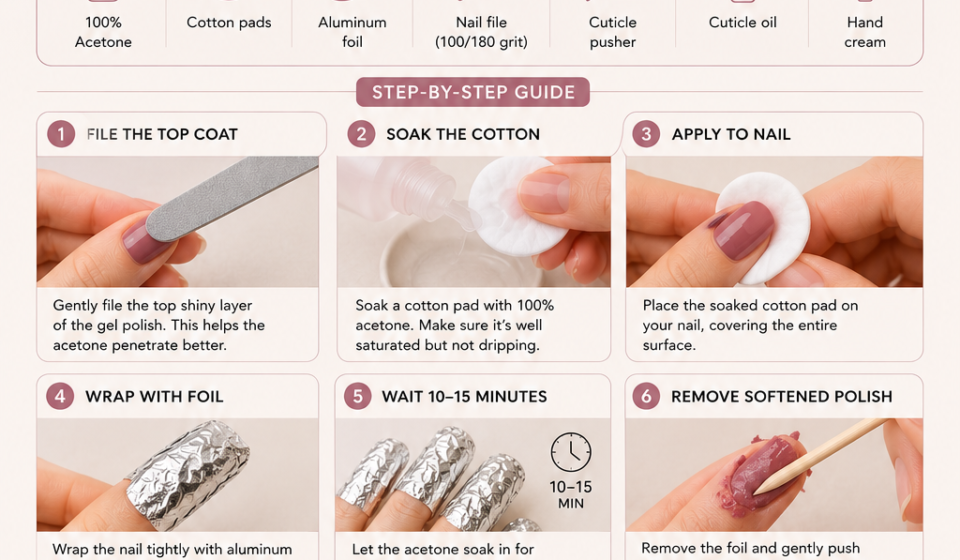
Step 1: File the Top Coat
Using a medium-grit nail file (around 180-grit), gently buff the shiny top layer of the gel polish. You are not trying to file off the gel entirely — just break the seal so the acetone can penetrate. File in one direction and use light pressure. Over-filing is one of the most common mistakes and can thin out your natural nail.
Step 2: Protect Your Skin
Acetone is drying and can irritate the skin around your nails. Apply a thin layer of cuticle oil, petroleum jelly, or a thick hand cream around each nail and on your fingertips to create a protective barrier. Avoid getting it on the nail surface itself, as this can interfere with the acetone’s effectiveness.
Step 3: Soak the Cotton and Wrap
Saturate a small piece of cotton ball or cotton pad with 100% acetone. Place it directly on top of your nail, ensuring it covers the entire nail surface. Wrap a small square of aluminum foil tightly around your fingertip to hold the cotton in place and trap the heat, which helps the acetone work faster.
Repeat this process on all fingers you are treating.
Step 4: Wait 10–15 Minutes
This is the most important step — patience. Leave the wraps on for at least 10 to 15 minutes. Resist the urge to peek or remove them early. The heat trapped under the foil accelerates the chemical process, softening the gel thoroughly.
If your gel polish is particularly thick or has multiple layers, you may need to wait up to 20 minutes.
Step 5: Remove and Gently Push Off the Gel
Remove one foil wrap at a time. Using a cuticle pusher or an orangewood stick, gently slide the softened gel off the nail using light downward strokes. The gel should come away easily — almost like peeling soft putty. If it resists, do not force it. Re-wrap that finger and wait another five minutes.
Never peel or scrape aggressively. Forcing the gel off pulls away layers of the natural nail plate, which leads to weakness, thinning, and sensitivity.
Step 6: Buff Away Any Residue
Once the bulk of the gel is removed, use a soft nail buffer to gently smooth away any remaining residue. Be gentle — a light pass is all that’s needed.
Step 7: Hydrate and Nourish
Acetone strips moisture from both nails and skin. Immediately after removal, wash your hands with gentle soap, then apply a generous amount of cuticle oil and hand cream. Massaging cuticle oil into each nail bed helps restore flexibility and promotes healthy nail growth.
Method 2: The Bowl Soak Method
The bowl soak method is a hands-free alternative, though it does expose more of your skin to acetone.
How to Do It:
- File the top coat of each nail as described in Method 1.
- Protect the skin around your nails with petroleum jelly or cuticle oil.
- Pour 100% acetone into a small glass or ceramic bowl. Do not use plastic, as acetone can dissolve certain plastics.
- Submerge your fingertips in the acetone and soak for 10 to 20 minutes.
- Use a cuticle pusher to gently slide off the softened gel.
- Buff lightly, then moisturize thoroughly.
Tip: Place the bowl of acetone inside a larger bowl of warm water. The warmth speeds up the chemical process without adding any heat source that could be a fire risk, as acetone is highly flammable.
Method 3: Using Gel Nail Removal Clips
Gel removal clips are reusable plastic clamps designed to hold an acetone-soaked cotton pad against the nail. They are a more eco-friendly and convenient alternative to foil.
The process is identical to the foil method — file, protect, soak the cotton, clip on, wait, and remove. Many nail enthusiasts prefer clips because they can be used repeatedly and are easier to apply than cutting and wrapping individual foil pieces.
How to Remove Gel Polish Without Acetone
If you do not have acetone on hand or prefer to avoid it, there are a few alternative approaches — though it’s important to set realistic expectations. These methods tend to be slower and less effective than acetone-based removal.
Option 1: Nail Polish Remover (Acetone-Based)
Regular acetone-based nail polish remover can work, but it is much more diluted than 100% pure acetone and will require significantly longer soak times. The process can take 30 to 45 minutes and may still leave stubborn residue.
Option 2: Rubbing Alcohol or Isopropyl Alcohol
Rubbing alcohol can soften certain gel formulas, particularly lighter or thinner gels. Soak a cotton ball in rubbing alcohol, wrap your nail, and wait about 20 minutes. Results vary significantly by gel brand and formula.
Option 3: Warm Water and Dish Soap
This method is the gentlest but the least reliable. Soaking nails in warm soapy water for 20 to 30 minutes may loosen the gel enough to gently push it away, but it rarely removes gel cleanly and can cause more peeling if you’re not careful.
Option 4: Let It Grow Out
If your gel is already lifting at the edges or almost grown out, simply filing away the free edge and letting the rest grow with your natural nail is a no-damage option — just be careful to keep the lifted edges trimmed to prevent snagging.
Common Mistakes to Avoid When Removing Gel Nail Polish
Even with the best intentions, mistakes happen. Here are the most common errors and how to sidestep them:
Peeling off the gel by hand. This is the number one cause of thin, damaged nails after gel removal. Peeling takes layers of your natural nail with it. Always use acetone.
Not filing the top coat first. Skipping this step means the acetone cannot penetrate the gel properly, making the process take much longer and often leaving thick residue.
Using too little acetone or dry cotton. The cotton needs to be fully saturated to work. A lightly damp cotton pad won’t break down gel effectively.
Removing the wraps too soon. Ten to fifteen minutes is the minimum. If you feel resistance when pushing, the gel hasn’t softened enough — rewrap and wait.
Scraping too aggressively. The cuticle pusher should glide across the nail, not dig into it. Light, gentle pressure is all that’s needed when the gel is properly softened.
Skipping aftercare. Acetone is harsh. Neglecting to moisturize after removal can lead to dry, brittle nails and cracked cuticles.
How Long Does Gel Nail Removal Take?
From start to finish, removing gel nail polish at home typically takes 30 to 45 minutes. This includes:
- Filing: 5–10 minutes
- Soaking with acetone: 10–20 minutes
- Pushing off residue and buffing: 5–10 minutes
- Aftercare: 5 minutes
Patience is the key ingredient. Rushing the soak time is the most common reason the process doesn’t go smoothly.
How to Care for Your Nails After Gel Removal
Post-removal nail care is just as important as the removal process itself. Gel and acetone together can leave nails temporarily dry, thin, and more prone to breakage.
Hydrate daily. Apply cuticle oil morning and night. Look for oils containing vitamin E, jojoba, or sweet almond oil.
Take a break from gel. Give your nails at least one to two weeks between gel manicures to allow them to recover. Consider using a strengthening base coat during this time.
Keep nails trimmed. Short nails are less likely to snag or break while they recover.
Stay hydrated and eat well. Nail health is closely linked to overall nutrition. Biotin, protein, and adequate hydration all support stronger nail growth.
Avoid harsh chemicals. When cleaning or doing dishes, wear gloves to protect your nails from further drying.
How Often Should You Get Gel Nails Removed?
Most gel manicures last two to four weeks before they begin to lift or grow out noticeably. Nail professionals generally recommend removing and replacing gel no more frequently than every two weeks, and allowing your nails a rest period between applications every two to three months.
When to See a Nail Technician
While at-home removal is perfectly safe when done correctly, there are situations where it’s worth visiting a professional:
- If you notice significant nail thinning, pain, or discoloration
- If the gel is builder gel, hard gel, or acrylic — these require different, more intensive removal processes
- If the gel has grown out significantly and is lifting, creating a risk of snagging or fungal moisture trapped underneath
- If you’re new to gel removal and want to learn proper technique from a professional before doing it yourself
Frequently Asked Questions
Can I use regular nail polish remover to take off gel polish? Standard nail polish remover is usually not strong enough to dissolve gel formulas properly. For best results, always use 100% pure acetone.
Will removing gel nails at home damage them? Not if done correctly. Following the steps above — especially avoiding peeling and moisturizing afterward — keeps natural nails healthy.
How do I know when the gel is ready to come off? When the gel has softened enough, it will look wrinkled or bubbled, and it will slide off the nail easily with gentle pressure from a cuticle pusher.
Can I remove gel nails without foil? Yes — nail removal clips work just as well, and the bowl soak method eliminates the need for foil entirely.
Is it safe to remove gel nails while pregnant? Acetone fumes can be irritating, so it’s best to work in a well-ventilated area. Many pregnant individuals choose to visit a salon with proper ventilation instead of doing it at home.
Final Thoughts
Getting off gel nail polish at home doesn’t have to be intimidating or damaging. With the right tools, the correct technique, and a generous helping of patience, you can remove gel cleanly and keep your natural nails in great condition. The foil wrap method with 100% acetone remains the most effective and nail-safe approach, and with a little practice, it becomes second nature.
The biggest takeaway: never peel, always soak, and always moisturize. Your nails will thank you for it.